Coll de Fades: Driving the 31-hairpin unpaved road in Lleida
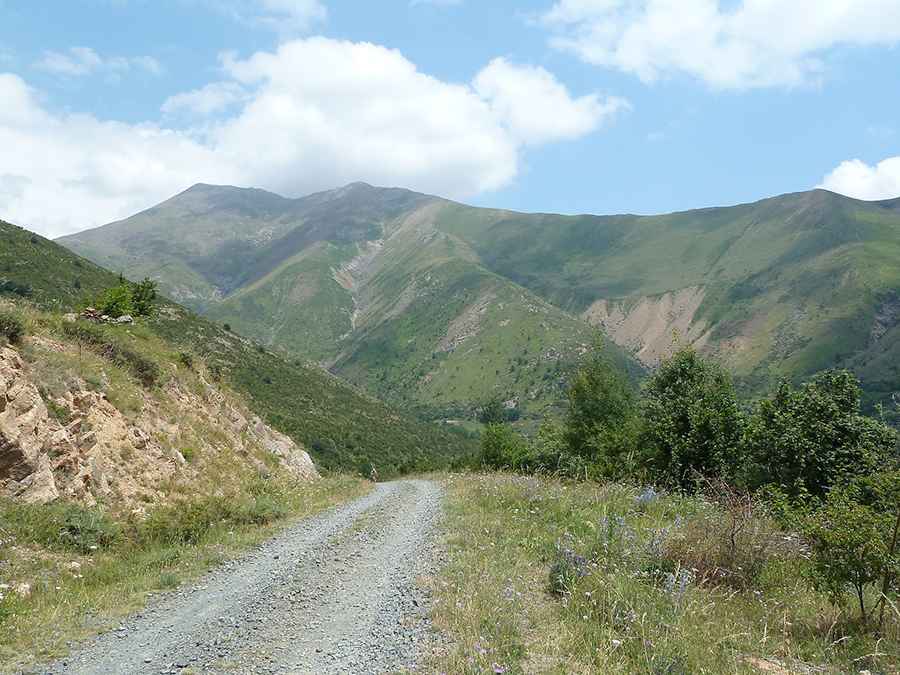
Coll de Fades is a mountain pass at an elevation of 1,505 meters (4,937 ft) above sea level, located in the Pyrenees within the Province of Lleida, Catalonia, Spain. Traversed by the unpaved Camí Erta-Sas, the track connects the Pallars Jussà and Alta Ribagorça regions through high-altitude ridges.
| Road facts: Coll de Fades (Lleida) | |
|---|---|
| Location | Pallars Jussà to Alta Ribagorça, Lleida, Catalonia (Spain) |
| Elevation | 1,505 m (4,937 ft) |
| Road Name | Camí Erta-Sas |
| Length | 17.7 km (11 miles) |
| Hairpin Turns | 31 switchbacks |
| Surface | Unpaved (Gravel, grey slate, and loose rock) |
| Vehicle Required | High-clearance 4x4 |
Where is the road through Coll de Fades located?
The unpaved route branches off the LV-5212 road near Sarroca de Bellera and runs 17.7 kilometers northwest toward Sentís and Sas. Along the way, the ridge path also crosses Coll de Sant Pere (1,450 m) and Coll de Peranera (1,469 m).
What are the driving conditions on the Camí Erta-Sas?
The 17.7-kilometer track is entirely unpaved, consisting of loose grey slate, limestone rocks, and dirt. The path features 31 tight hairpin turns cut into open ridges. High ground clearance and four-wheel drive are required to clear rocky ledges and prevent tires from spinning on loose gravel inclines.
What hazards exist on the Coll de Fades mountain track?
The single-lane track lacks guardrails along steep, unprotected drop-offs. Meeting oncoming traffic requires stopping or reversing to narrow passing pockets on steep inclines. Sharp slate debris along the driving line poses a constant risk of tire sidewall punctures, while there are no fuel or vehicle services along the 17.7-kilometer route.
Is the road over Coll de Fades open in winter?
The track remains open most of the year, though winter storms bring temporary snow accumulation and ice to the 1,505-meter ridge. Snowplows do not maintain this unpaved route, so driving after cold snaps requires 4x4 capability or winter gear to navigate frozen mud ruts and snow patches.
Pic: Carmina Haro