Is the road to Puerto Molina in Sierra Nevada open to vehicles?
Puerto Molina is a high mountain pass at an elevation of 2,394m (7,854ft) above sea level, located in the Sierra Nevada range in the province of Granada, in Spain. It serves as a key high-altitude point along the track leading toward Pico del Veleta.
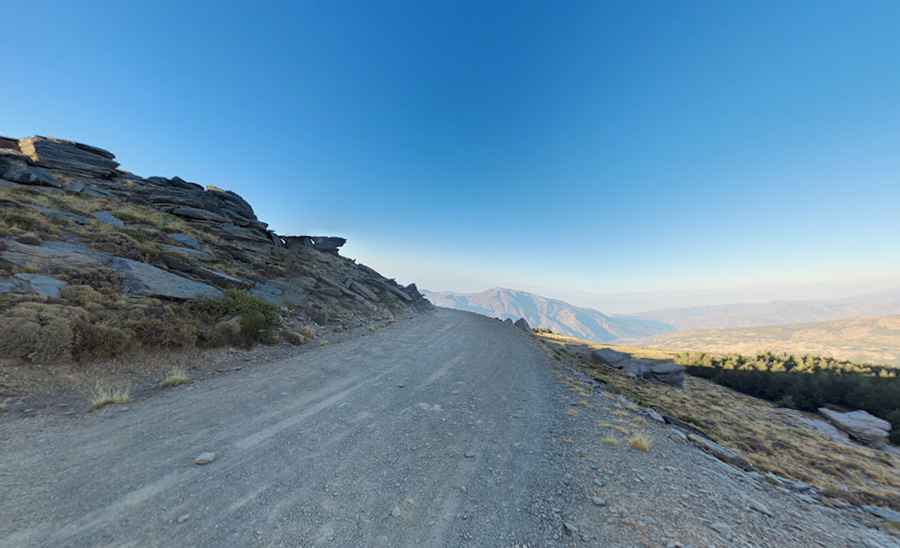
| Road facts: Puerto Molina | |
|---|---|
| Location | Sierra Nevada, Granada, Andalusia (Spain) |
| Elevation at Summit | 2,394 m (7,854 ft) |
| Length | 23.3 km (14.47 miles) from Capileira toward Veleta |
| Surface | 100% unpaved (loose slate, shale, dirt) |
| Vehicle Access | Restricted (Barrier at Hoya del Portillo) |
| Connecting Points | Hoya del Portillo parking |
Where is Puerto Molina located?
Puerto Molina is situated in the high slopes of the Alpujarra region on the southern side of the Sierra Nevada mountains. The track runs north-south, connecting the town of Capileira with the upper slopes of Veleta.
Is the road to Puerto Molina paved?
No. The track is entirely unpaved, consisting of loose shale, dirt, and fragmented slate. Traction is low, particularly during the spring snowmelt, and the surface is prone to ruts and rockfalls from adjacent schist slopes.
Can you drive a car to Puerto Molina?
No. Public motorized traffic is prohibited under Sierra Nevada National Park regulations. The road is blocked by a permanent barrier at Hoya del Portillo (2,150 m). Beyond this control point, access is strictly limited to park service vehicles, authorized mountain taxis, forest fire units, and non-motorized users like cyclists and hikers.
How long is the unpaved track through Puerto Molina?
The total unpaved mountain route from Capileira to the upper slopes of Veleta spans 23.3 km (14.47 miles). The track climbs continuously along the edge of the Poqueira gorge drainage area through high-altitude terrain without tree cover.
How dangerous is the weather at Puerto Molina?
At 2,394 meters, weather conditions can turn severe rapidly. Deep snow drifts and ice cover keep the route impassable for six to eight months of the year. High crosswinds coming off the Mediterranean and sudden mountain fog (known locally as 'tarbinas') can drop visibility to zero along unprotected cliff edges.
Pic: Dan Sheehan