How to drive the unpaved 4x4 track to Refugi del Gònec?
Refugi del Gònec is a mountain refuge at an elevation of 1,765 meters (5,790 ft) above sea level, located in the Cerdanya comarca, within the Lleida province of Catalonia, Spain. Situated on the northern slopes of the Serra del Cadí, the high-altitude shelter is reached via an unpaved mountain track starting from the village of Pi.
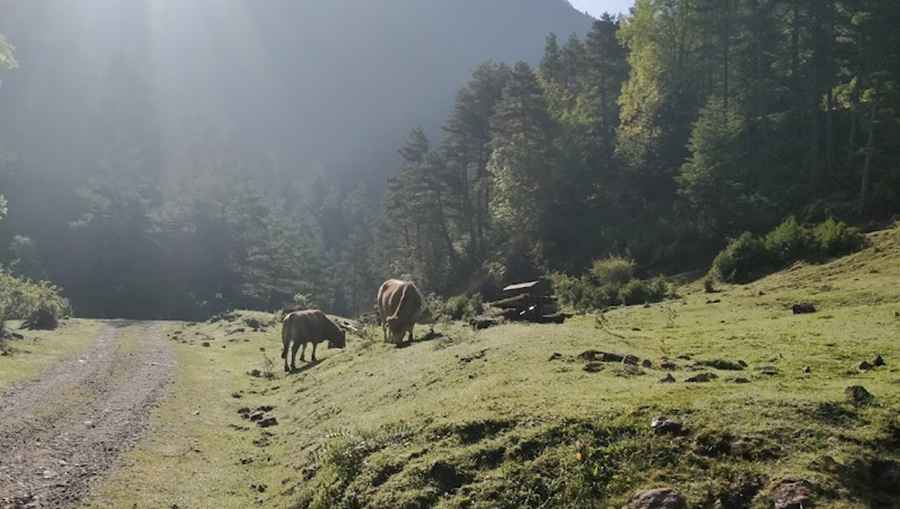
| Road facts: Refugi del Gònec | |
|---|---|
| Location | Cerdanya, Lleida (Spain) |
| Elevation | 1,765 m (5,790 ft) |
| Length | 9.2 km (5.71 miles) from Pi |
| Elevation Gain | 691 m |
| Average Gradient | 7.51% |
| Surface | Unpaved (Gravel and limestone rock) |
How difficult is the unpaved track to Refugi del Gònec?
The 9.2 km mountain track climbs 691 vertical meters from the valley floor. The surface is completely unpaved, consisting of loose gravel and sharp limestone rocks packed with deep ruts. Standard road cars will scrape the oil pan or puncture a tire; a high-clearance 4x4 vehicle is necessary to handle the irregular surface. The track maintains a steady 7.51% average gradient with narrow passing spots flanked by steep slopes.
What are the vehicle restrictions in the Parc Natural del Cadí-Moixeró?
The track runs inside the protected area of the Parc Natural del Cadí-Moixeró and is subject to strict park transit regulations. Motorized access is permitted along the main route, but the final section closest to the refuge is closed to private vehicles, turning the drivable path into a dead-end. Drivers must turn around before the restricted barrier on a very tight mountain lane.
What mechanical precautions are needed for the Serra del Cadí climb?
The continuous 9.2 km ascent puts high thermal strain on cooling systems in low gears. On the way down, the 7.51% slope requires driving in low range using engine braking to avoid overheating and fading the brakes. The sharp limestone fragments common in this sector of the Pre-Pyrenees demand tough tire sidewalls, and winter driving is completely blocked by fast ice formation on the northern face.
Pic: Jaume Flotats