Is the road to Albergue de San Francisco in Sierra Nevada difficult to drive?
Albergue de San Francisco is a historic mountain refuge at an elevation of 2,206 meters (7,237 ft) above sea level in Granada, Spain. Located in the Sierra Nevada National Park above the San Juan Valley, the refuge is accessed via a narrow, unpaved mountain track starting from Collado del Diablo.
| Road facts: Albergue de San Francisco | |
|---|---|
| Location | Güéjar Sierra, Granada, Andalusia (Spain) |
| Elevation | 2,206 m (7,237 ft) |
| Length | 2.1 km (1.3 miles) from Collado del Diablo |
| Surface | Unpaved dirt and loose shale track |
| Access Restriction | Closed to private motor vehicles (Locked gate barrier) |
Where is the road to Albergue de San Francisco located?
The track branches off from Collado del Diablo within the Sierra Nevada National Park, in the province of Granada. The high-altitude route runs along the ridges of the San Juan Valley, offering direct views toward the northern face of Pico Veleta.
Is the road to Albergue de San Francisco paved?
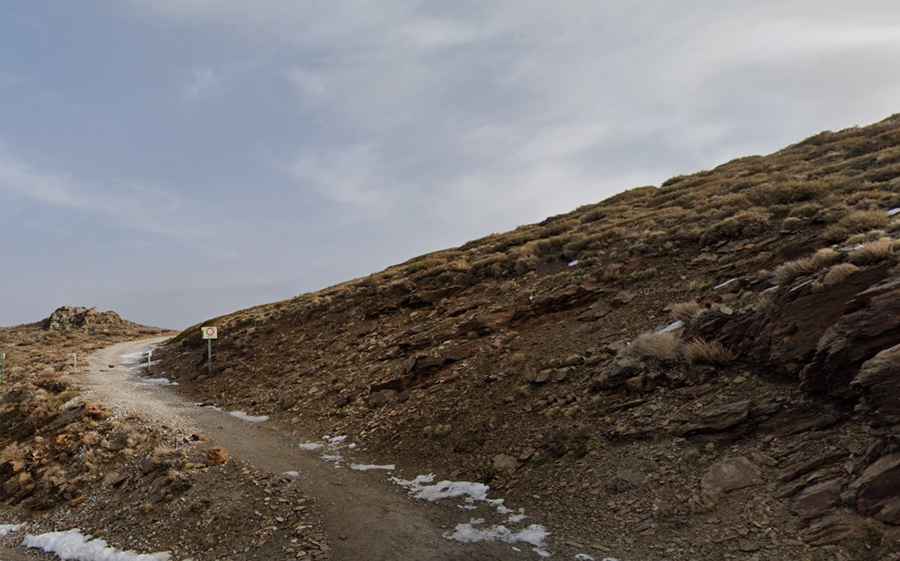
No. The entire 2.1-kilometer route is unpaved, consisting of dry earth, loose rock, and sharp shale. Private motorized vehicles are strictly banned by National Park regulations, and access is restricted by a locked physical barrier. Only authorized park rangers and management personnel with high-clearance 4x4 vehicles are permitted to drive the track.
What hazards exist on the road to Albergue de San Francisco?
The primary hazards are extreme high-altitude weather shifts and surface erosion. Heavy rains create mud washouts, while snow covers the track entirely from November through May. Leftover snow banks frequently block the passage into early summer, leaving the ground soft and rutted.
How long is the road to Albergue de San Francisco?
Starting from the paved turn-off at Collado del Diablo, the unpaved track to the refuge measures 2.1 kilometers (1.3 miles). The route climbs through alpine meadows up to the red dome of the refuge at 2,206 meters.