How to drive the 4x4 road to Pedras Blancas in Aragon?
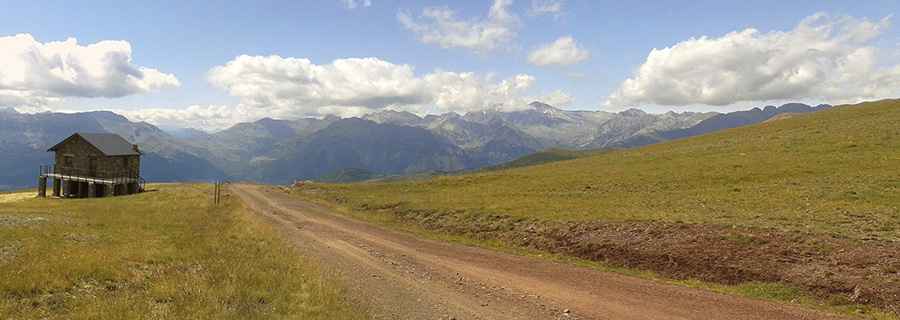
Pedras Blancas is a high mountain peak at an elevation of 2,359m (7,736ft) above sea level, located in the province of Huesca, Aragon, Spain. The unpaved mountain track leading to the summit is famous for being one of the highest drivable routes in the Pyrenees.
| Road facts: Pista Pedras Blancas | |
|---|---|
| Location | Arasán, Benasque Valley, Ribagorza, Spain |
| Elevation | 2,359 m (7,736 ft) |
| Length | 11.0 km (6.8 miles) |
| Max Gradient | Up to 15% on upper switchbacks |
Where is Pedras Blancas?
The peak, also known as Piedras Blancas or Prado de Murias, rises within the Ribagorza comarca in northeastern Aragon. Situated just south of Pico Gallinero, the summit features a wind flag due to its exposure. During the summer, the track sees regular traffic from mountain bikers and paragliding vehicles heading to the high take-off zones.
Why is it called Pedras Blancas?
The name stems from a distinct white limestone formation located about two kilometers below the summit ridge, near the alpine pastures and the local Arasán mountain hut. These prominent white rocks sit right next to the main launch site, making this mountain a world-renowned destination for international paragliding pilots who access the ridge via the mountain track.
Is the road to Pedras Blancas in Aragón paved?
The vast majority of the route is unpaved. The drive starts with a few tight asphalted hairpins just above the village of Arasán to negotiate the initial steep slope, but it quickly transitions into the dirt Pista de Pedras Blancas. The track surface consists of packed dirt, coarse gravel, and sections of loose shale. While the lower forest part is relatively smooth, the upper mountain switchbacks require a high-clearance vehicle to avoid scraping the oil pan against exposed rocks.
Is the road to Pedras Blancas challenging?
The climb is demanding on both the transmission and the cooling system. Over its 11.0 km (6.8 miles) length, the track gains a massive 1,065 meters of vertical elevation from Arasán, sustaining a steep 9.68% average gradient. The main difficulty lies in the final alpine kilometers, where the trail narrows significantly and presents steep ramps hitting up to 15% inclinations. On these upper hairpins, the lack of tarmac causes wheels to spin easily if the vehicle lacks proper traction or four-wheel drive.
Is the road to Pedras Blancas open?
Set high in the central Pyrenees, this high-altitude track is completely seasonal. Heavy snowfalls and deep drifts block the route entirely from late autumn until late spring. Even during early summer, melted snow water creates deep mud ruts along the path, making it impassable for standard road cars until the dirt dries out completely.
Road suggested by: jorge manuel gómez sánchez
Pic: Pänta Rheî