Driving the narrow A-2218 road through Congosto de Baldellou
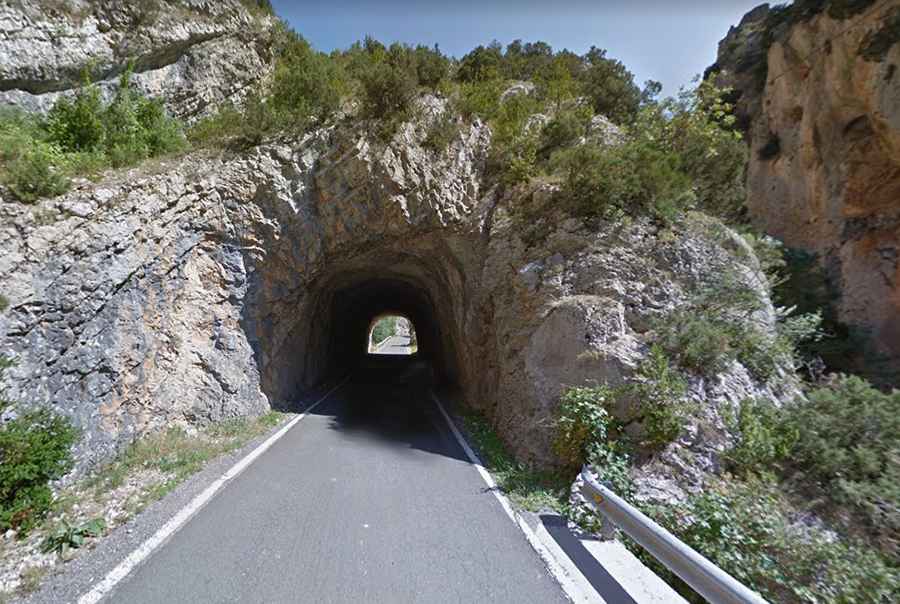
Congosto de Baldellou is a technical and high-exposure canyon passage located in the Huesca province of Aragon, Spain. Traversed by the A-2218 road, this route through the Litera comarca follows the deep gorges carved by the Pedriza River, including the sectors known as Congosto de Camporrélls and Congosto del Regué. While the surface is paved, the physical reality of the drive is defined by extreme narrowness, unlined rock tunnels, and a landscape where the mountain walls sit inches away from the vehicle's mirrors, making it one of the most demanding canyon roads in Spain.
| Road facts: Congosto de Baldellou (A-2218) | |
|---|---|
| Location | Huesca, Aragon, Spain |
| Length | 6 km (3.72 miles) |
| Route | Camporrélls to Baldellou |
| Technical Feature | Unlined rock tunnels / Narrow ledge |
How difficult is the A-2218 drive through the gorges?
The 6-kilometer journey between Camporrélls and Baldellou is a test of precision steering and spatial awareness. The A-2218 is notoriously narrow, often reducing to a single lane where the rock face has been blasted out to make room for the road. The most challenging sections involve unlined tunnels where the jagged ceiling and walls require a slow-speed crawl to avoid mechanical damage. The logistics of the drive are complicated by blind curves and the high-frequency risk of encountering local traffic or agricultural vehicles; reversing on these ledge sections is a high-risk maneuver with zero margin for error due to the proximity of the vertical drops.
What are the main hazards in the Congosto de Camporrélls?
The primary hazard is the geological instability of the limestone walls. Rockslides are a constant physical reality, and small debris can frequently be found on the asphalt. During and after rain, the road surface becomes exceptionally slippery as mountain runoff carries fine sediment across the lane. The humidity inside the narrow tunnels often leaves a "greasy" layer on the asphalt that significantly reduces tire grip. Furthermore, the safety barriers are inconsistent or absent in the tightest sectors, where the road clings to the Pedriza River bed. The psychological pressure of driving between the massive rock masses requires absolute focus and steady nerves.
Is the road to Baldellou dangerous in winter?
Yes. While the elevation is moderate, the deep shadows of the Congosto de Baldellou mean that moisture stays on the ground for days. In winter, "hidden ice" is a frequent danger in the shaded passages and inside the rock tunnels. The road is not a high-priority snow-clearing route, and a localized storm can turn the narrow A-2218 into a trap. Visibility is often restricted by the canyon's topography and sudden mountain mists, making it difficult to spot rockfall debris on the driving line. Always check the weather forecast for the Litera area, as heavy rain makes the slippery surface and the rockfall risk escalate instantly.
What mechanical prep is needed for the Huesca canyon crossing?
Before leaving Camporrélls, verify that your headlights and horn are in perfect working order; the horn is an essential logistical tool for signaling your presence in the blind curves and dark tunnels. Check your braking system, specifically the pads and fluid, as you will be modulating speed constantly through the twists of the gorge. Ensure your tires have high-grip ratings to handle the damp and often debris-covered asphalt. Carry a powerful flashlight and basic emergency gear, as a breakdown inside the canyon means waiting for help in a high-isolation sector where cellular signals are often blocked by the vertical rock walls. In the Aragonese Prepyrenees, your vehicle's reliability and your ability to manage tight clearances are your only safety nets.
Road suggested by: jorge manuel gómez sánchez