Driving through the narrow tunnels of Desfiladero de La Yecla
Desfiladero de La Yecla is a narrow limestone canyon located in the province of Burgos, Castile and León, Spain. The route through this deep gorge, carved by the Arroyo del Cauce, follows the BU-910 road, a technical and narrow sector characterized by underground transits and high geological instability.
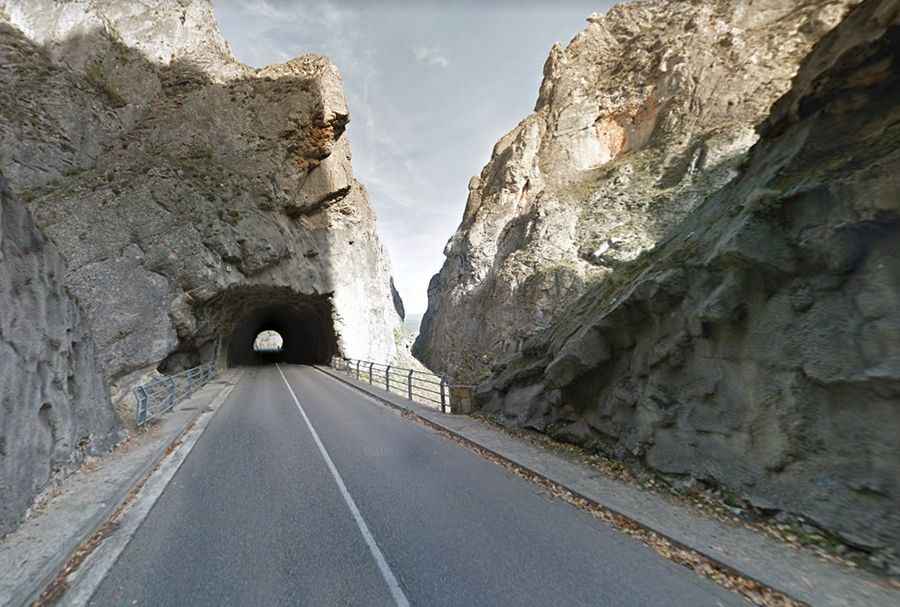
| Road facts: Desfiladero de La Yecla (BU-910) | |
|---|---|
| Location | Burgos, Castile and León (Spain) |
| Road Number | BU-910 (Paved) |
| Length | 8.4 km (5.21 miles) |
| Hazards | Narrow tunnels / Rock slides |
How challenging is the BU-910 road through Desfiladero de La Yecla?
The 8.4 km (5.21 miles) stretch of the BU-910 running from Santo Domingo de Silos to Espinosa de Cervera is a logistical challenge due to the verticality of the limestone cliffs. Technically, the road is forced to cross the ridge through two narrow tunnels right beneath the gorge. Drivers must account for the sudden change in light and the restricted width inside these tunnels. Logistically, the parking area located at the exit of the second tunnel is the only designated spot for stopping, but its limited capacity often leads to traffic congestion on the main roadbed during peak hours.
What are the primary hazards when driving Desfiladero de La Yecla?
The most significant technical risk along the Desfiladero de La Yecla is the high risk of rock slides. The proximity of the limestone walls to the paved surface means that after heavy rains or thermal shifts, debris frequently falls onto the BU-910. Furthermore, the road runs parallel to a narrow pedestrian walkway built inside the gorge; while tourists focus on the scenery, drivers must maintain focus on the narrow shoulders and potential oncoming traffic in the tunnel sectors, where lateral clearance is minimal for larger vehicles or vans.
Is the road to Desfiladero de La Yecla accessible year-round?
The BU-910 through Desfiladero de La Yecla is a paved regional road typically open throughout the year. However, logistically, the winter months bring added hazards such as black ice inside the tunnels and increased moisture on the limestone cliffs, which exacerbates the rockfall risk. Technically, the 8.4 km transit requires low speeds and high situational awareness, especially near the Santo Domingo de Silos monastery sector, where pedestrian movements and wildlife, such as large colonies of vultures, can distract from the immediate mechanical and navigational demands of the road.