Driving the narrow Tartalés Canyon Road in Burgos
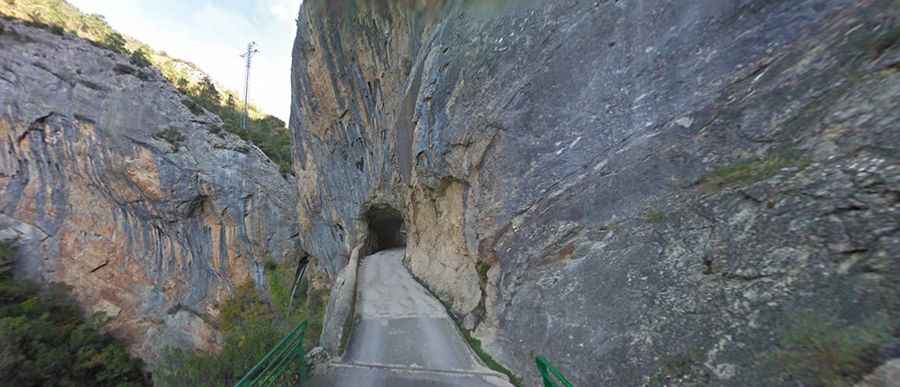
Tartalés Canyon Road is a brutal stretch of asphalt that clings to the limestone walls of the Garganta de Tartalés in Burgos. This is not a road for casual drivers; it is a narrow path where the rock face overhangs the track and the drops into the creek below are vertical and unguarded. The route connects Hoz de Valdivielso with the small village of Tartalés de los Montes, and it feels more like a mountain trail than a public road. If you suffer from vertigo or your vehicle is wider than a standard 4x4, you should think twice before heading up here.
| Road facts: Tartalés Canyon Road | |
|---|---|
| Location | Burgos, Castile and León, Spain |
| Length | 1.7 km (1.05 miles) |
| Max Gradient | 21% |
| Elevation Gain | 138 meters |
How challenging is the drive through Tartalés Canyon Road?
This is one of the tightest canyon roads in Spain. The main problem is the width of the track. In many sections, it is impossible for two cars to pass each other. This means you must be an expert at reversing your vehicle along a cliff edge, as you might have to go back several hundred meters if you meet someone coming the other way. The road also features a tunnel carved directly into the karst rock that is barely wide enough for a single car, requiring you to watch your mirrors and the roof of your vehicle to avoid scraping the stone.
Is Tartalés Canyon Road steep?
The climb is short but incredibly fierce. While the average gradient sits around 8%, there are ramps that hit a 21% incline. This will put your first gear and your brakes to a serious test. If you are driving up, you need to keep the engine in its power band to avoid stalling on the steepest parts. On the way down, you must use engine braking to prevent the pads from overheating. The pavement is old and can be slippery when wet, and since there are no guardrails in the most dangerous spots, traction is everything.
What are the main risks on the Tartalés Canyon Road?
Rock slides are a constant threat here. The karst erosion that created the gorge also means that loose stones can drop onto the road at any time, especially after heavy rain. You should also watch out for water crossing the road near the Tartalés waterfall, which can make the surface unpredictable. The biggest mechanical risk is the undercarriage; despite being paved, the edges of the road are crumbling, and if you get too close to the wall to let someone pass, you risk hitting the low-hanging rock or catching a tire on a sharp stone. It is a slow drive where you need to listen to the car and keep your eyes on the ground ahead.
Road suggested by: jorge manuel gómez sánchez