Is the road to Tuc de Salana in the Aran Valley difficult to drive?
Reaching the Tuc de Salana is a journey to the high-altitude heart of the Pyrenees. At 2,143m (7,030ft) above sea level, this peak dominates the landscape of the Aran Valley in Catalonia. The route, known as the Camin de Pruedo, is a spectacular but demanding mountain loop that connects Salardú and Arties. It’s a road that takes you deep into the Aigüestortes i Estany de Sant Maurici National Park, where the jagged peaks and glacial lakes make you feel very small, very quickly.
| Road facts: Tuc de Salana (Camin de Pruedo) | |
|---|---|
| Location | Aran Valley, Lleida (Spain) |
| Elevation | 2,143m (7,030ft) |
| Road Name | Camin de Pruedo |
| Length | 27.5 km (17.08 miles) |
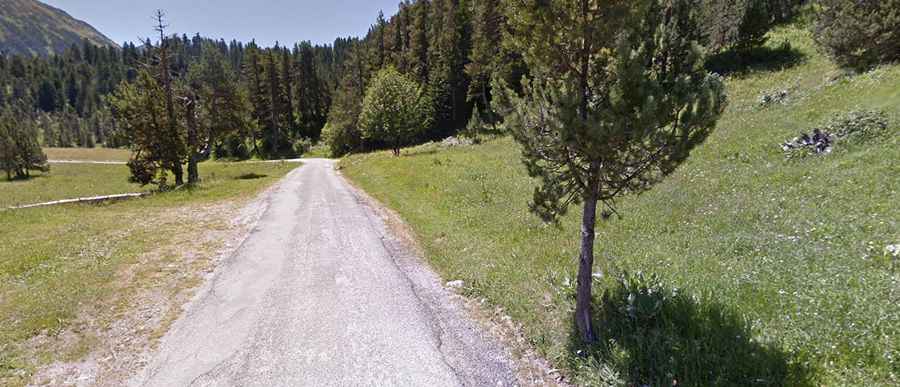
| Surface | Paved (Poor Condition / Narrow) |
How long is the road to Tuc de Salana?
The full loop through the Camin de Pruedo is 27.5 km (17.08 miles) long. If you start from Salardú, you face a relentless climb toward the high plateau. The drive takes about 90 minutes if you don't stop, but the reality of these mountain hairpins means you’ll be moving much slower. The road carves through the forest before opening up to the massive granite walls of the Circ de Colomèrs. It’s a long, lonely stretch of asphalt where the only traffic you’ll likely meet are the official 4x4 taxis that ferry hikers up to the Lac Major de Colomèrs.
Is the road to Tuc de Salana paved?
While the road is technically paved, calling it a "smooth drive" would be a lie. As seen in the local conditions, the asphalt is old, rough, and narrow. Years of freezing winters and heavy snow have left the surface full of cracks and potholes. It’s a single-lane track for much of the way, meaning if you meet a taxi or another vehicle coming down, someone is going to have to back up to a "crossing point." There is no shoulder, just grass on one side and a steep drop-off or a rock wall on the other. You’ll need a steady hand on the wheel to keep from wandering into the ruts.
What are the hazards when driving to Tuc de Salana?
The biggest threat on the Camin de Pruedo is the terrain itself. This is a high-risk avalanche zone; in the spring and early summer, massive slides can block the road or weaken the edges of the asphalt. During the winter months, the route is completely buried under meters of snow and is totally impassable. Even in summer, sudden mountain storms can turn the road into a stream of water and loose gravel. You also need to watch out for stray cattle and horses that roam freely in the National Park. They have no fear of cars and often block the road in the narrowest sections.
Is the drive to Tuc de Salana worth it?
For those who want to reach the very edge of the Pyrenean high country, this drive is a must. The views of the Lac Major de Colomèrs and the surrounding peaks are world-class, but your focus should stay on the narrow lane. There are no gas stations and no cell service once you climb away from Arties. Ensure your brakes are in top condition for the long descent back to the valley, as the constant braking on the steep hairpins will make them smoke if you don't use your engine to slow down. Take it slow, keep your eyes on the next bend, and focus on the road. The Aran Valley rewards the patient driver.
Driving the Camin de Pruedo is a reminder that the Pyrenees don't care about your schedule. The road to Tuc de Salana is a beautiful, nerve-wracking experience that takes you to the limit of where a standard car can go. Check the weather in Salardú before you start, make sure you have enough fuel, and stay sharp. The mountain is big, the road is small, and the rewards are endless if you know how to handle the rissles of the high park.