Driving the winding GM-1 to the Viewpoints of Valle Gran Rey
The GM-1 is the main mountain road on the island of La Gomera, in the Canary Islands, Spain. The western sector drops steeply from the central highlands down into Valle Gran Rey, running along volcanic cliffs and past several notable lookout points.
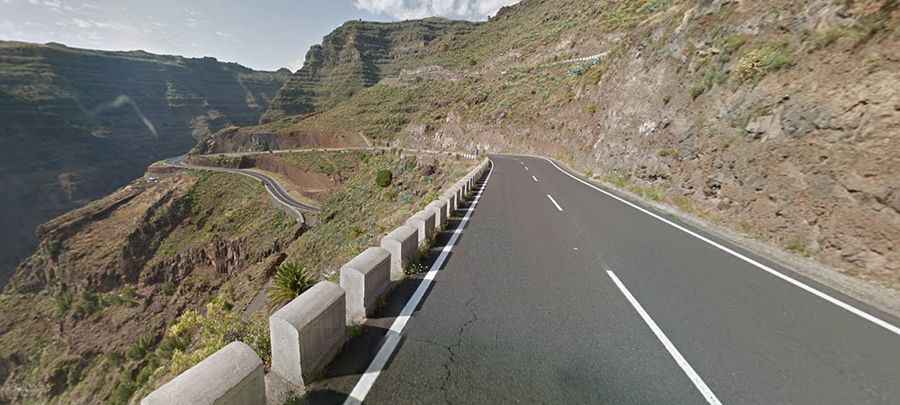
| Road facts: GM-1 (Valle Gran Rey sector) | |
|---|---|
| Location | Western La Gomera, Canary Islands (Spain) |
| Max Elevation | 796 m (2,611 ft) at Mirador de la Retama |
| Road Number | GM-1 |
| Surface | Paved |
| Primary Hazards | Tight hairpins, rockfalls, and tour bus traffic |
Where is the GM-1 road to Valle Gran Rey located?
The road is located on the western side of La Gomera. The descent into Valle Gran Rey branches off the central island ridge near Arure and snakes down along the cliff walls toward the Atlantic coast.
What are the driving conditions on the GM-1 descent?
The road is fully paved and well-maintained, but it features continuous steep drops and sharp hairpin turns. The upper section passes Mirador de la Retama at 796 meters elevation before winding down past Mirador César Manrique (705 m) and Mirador de la Curva del Queso (609 m). Meeting tour buses or large service vehicles on these tight curves requires slowing down or stopping at wider sections of the lane.
What hazards exist along the GM-1 cliff route?
Rockfalls from overhanging volcanic cliffs are common after rain, leaving loose stones on the asphalt. Strong wind gusts hit exposed ridge sections near the upper viewpoints. On the continuous 800-meter descent to the coast, drivers must use low gears to engine brake and prevent brake overheating along the hairpins.
Key Viewpoints along the GM-1 Valle Gran Rey Descent
Three main viewpoints sit directly along the roadside during the descent:
Mirador de la Retama (796 m): Located near the top of the descent, offering views across the upper valley basin.
Mirador César Manrique (705 m): Features a designed lookout building with a designated parking area and restaurant facilities.
Mirador de la Curva del Queso (609 m): Positioned directly on a sharp hairpin bend with limited parking space along the cliff edge.