La Trapa: Driving the steep unpaved track in the Tramuntana
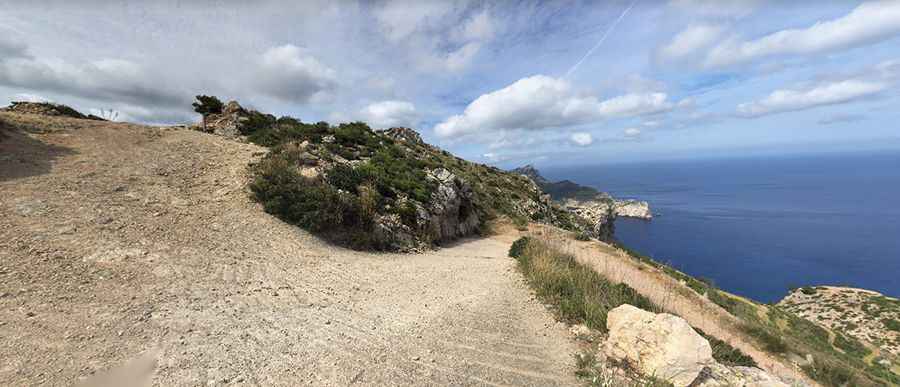
La Trapa is a former monastery at an elevation of 359m above sea level, located on the southwest coast of Mallorca, Spain. Situated in the Serra de Tramuntana, the access road is a rugged, unpaved track that climbs through the Sant Josep valley. The route is characterized by extreme exposure, loose limestone surfaces, and sections where the track is physically won from the cliffside, overlooking the island of Sa Dragonera.
| Road facts: La Trapa (Coll de ses Ànimes) | |
|---|---|
| Location | Serra de Tramuntana, Mallorca |
| Elevation | 359 m (Coll de ses Ànimes) |
| Length | 4.8 km from MA-1030 |
| Max Gradient | 10% (Sustained) |
Where is the road to La Trapa located?
The track starts from the paved MA-1030 road near S'Arracó and climbs toward the Coll de ses Ànimes. It is a dead-end route that serves the abandoned monastery area, now managed as a natural reserve. The terrain is typical of the Tramuntana range: sharp limestone bedrock and total exposure to the Mediterranean winds. There are no services, water, or safety barriers along the entire 4.8 km stretch.
Is the road to La Trapa unpaved?
Yes, the road is entirely unpaved and consists of crushed limestone, loose gravel, and sections of exposed rock. As seen on the ground, the track is narrow and cut into the mountain face with vertical drops on one side. The surface is highly unstable; tires struggle for traction on the steeper hairpins where the gravel has been washed away by rain. A high-clearance vehicle is mandatory for authorized transit to avoid bottoming out on the rocky steps and deep ruts.
Can I drive my vehicle to La Trapa?
No. The road is closed to private motor vehicles and is blocked by a physical barrier. Access is strictly limited to authorized management vehicles and emergency services. For those with a permit, a 4x4 with low-range gearing is essential. The track is too narrow for two vehicles to pass, meaning any encounter requires one driver to reverse for long distances on a ledge with high exposure and zero guardrails.
How steep is the climb to Coll de ses Ànimes?
The climb is relentless. Over the first 4.0 kilometers, the road maintains a brutal average gradient of 10%. This sustained incline, combined with the loose surface, puts extreme load on the drivetrain and cooling system. At low speeds, engines can run hot due to the lack of airflow. On the descent, engine braking is the only way to prevent brake fluid from boiling, as the steepness forces constant modulation of the speed on the tight switchbacks.
What are the hazards of the La Trapa track?
The primary hazard is the extreme exposure and the lack of road width. The limestone scree makes the track "greasy" even in dry weather, causing steering to feel light and unpredictable. In several sections, the edge of the road is crumbling into the ravine below. Sudden gusts of wind from the sea can affect the stability of high-profile vehicles. Mechanical self-sufficiency is mandatory; any breakdown on this narrow ledge requires a complex recovery that can block the entire access route for days.
Pic: Lars Frahm