Alentejo by Bike: The Roads, Climbs and Summer Heat
Portugal's Alentejo has no famous mountain pass. Its roads earn attention another way. They are long, quiet and exposed, and many of them link old towns built around castles.
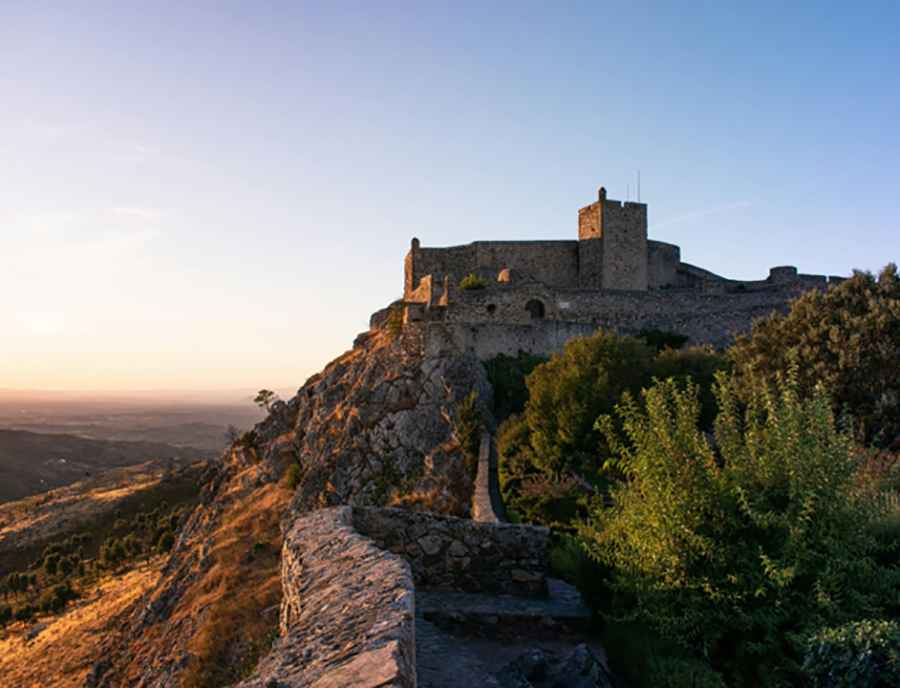
Top Bike Tours Portugal publishes a full route for cycling through Alentejo wine country and its castles. Its tour page gives the numbers: 8 days, 7 nights, 368 km, rated moderate to hard. With official weather and traffic data, they show what these roads ask of a rider.
What Kind of Roads Make Up the Route?
Mostly small ones. The tour page describes rolling hills and scenic backroads, and puts the mix at 85% paved roads and 15% smooth unpaved paths. Riders on road bikes follow a fully paved version of the same route.
The paved sections are country roads, not cycle paths. The page calls the stretch from Reguengos toward Évora "some of the quietest roads of this region", with vineyards and farmland almost to the city's edge.
Town surfaces change the picture. In Estremoz, the page points riders to the white marble cobblestones of the city. Polished stone can grip poorly when wet, and cobbles rattle tired hands at the end of a long day.
How Long Is Each Riding Day?
The standard itinerary has six riding days between arrival and departure:
- Marvão to Alter do Chão: 67 km.
- Alter do Chão to Monforte: 50 km.
- Monforte to Estremoz: 60 km.
- Estremoz to Monsaraz: 72 km.
- Monsaraz to Évora: 61 km.
- Évora loop via Arraiolos: 57 km.
The premium version swaps the first two days for Marvão to Crato (55 km) and Crato to Monforte (63 km). An optional extra day adds an Évora loop of 36, 44 or 55 km.
No day is extreme by touring standards. The difficulty comes from repeating 50 to 72 km in open country, often in the heat.
Where Do the Climbs and Descents Fall?
The route starts at Marvão, where the tour page lists the 9th-century castle and panoramic views of the Alentejo as the first stop. The first riding day leaves the village through Beirã and the medieval town of Castelo de Vide.
The page describes the Monforte day as running mostly near agricultural fields. Then comes the longest stage, Estremoz to Monsaraz. The page says the first half is easy, followed by a smooth climb to Borba and on to Vila Viçosa.
The page adds that after 4 kilometers, "a long descent will guide you" to the artificial lake of Alqueva. Long descents on rural tarmac reward caution. Gravel can wash onto bends, farm vehicles can turn without warning, and loaded bikes take longer to stop.
The route passes the Outeiro Menhir just before Monsaraz, where the day ends. Castle towns often sit on raised ground, so riders should expect the last stretch into town to rise.
For scale, the site's list of the highest roads in Portugal tops out at Torre in the Serra da Estrela, at 1,996 m. IPMA's Évora weather station sits at 247.6 m.
How Hot Do These Roads Get?
Heat is the real hazard. Portugal's weather institute, IPMA, publishes Évora's climate normals for 1991 to 2020. They show why timing matters more than fitness.
Month | Average daily high | Average days at 35 °C or more |
April | 20.7 °C | 0.0 |
June | 30.2 °C | 5.6 |
July | 33.3 °C | 11.5 |
August | 33.5 °C | 10.9 |
October | 24.1 °C | 0.1 |
The station's highest reading was 45.4 °C, on 4 August 2018. July averages just 2.7 mm of rain, so shade and water are scarce on open roads.
The tour's own FAQ agrees that spring and autumn offer ideal weather and that summer can be hot. Its pricing calendar runs a summer season from 26 June to 30 August. Summer riders should start at first light and refill in towns.
What Do Portuguese Road Rules Say About Cyclists?
Portugal's road code is published in full by the road safety authority, ANSR, as the Código da Estrada. Several articles matter on rural roads:
- Passing distance. Article 18 requires drivers of motor vehicles to keep at least 1.5 m from a cyclist in the same carriageway.
- Article 38 repeats the 1.5 m minimum and requires drivers to slow down when passing.
- Riding two abreast. Article 90 allows cyclists to ride side by side, two at most, except on roads with reduced visibility or heavy traffic.
- Road position. The same article tells cyclists to keep to the right of the lane.
- Article 72 bans bicycles from signed motorways and their access roads.
- E-bikes. Article 112 defines a pedal-assist bike as one with a motor of up to 1.0 kW that cuts out at 25 km/h.
The code also halves most fines when they apply to cyclists. The 1.5 m rule helps on narrow lanes, but it protects nobody on a blind bend.
How Does This Compare With Portugal's Famous Driving Roads?
Drivers come to Portugal for big names. The Estrada Nacional 2 runs 738 km from Chaves to Faro, and the Serra da Estrela gets the high-mountain headlines.
The Alentejo route is a different challenge. Few single moments are hard. Instead, the road asks for steady effort, sun management and attention to surfaces that change within a day.
What Should Riders Check Before Each Day?
A few checks help on roads this open:
- Read the day's distance and know where the long descents fall.
- Carry more water than seems necessary from June to September.
- Lower tire pressure slightly for cobbled town centers and unpaved paths.
- Ask about e-bikes if a group mixes fitness levels; the tour FAQ says they are available.
The tour page sets a minimum age of 16 and offers the route guided or self-guided, with GPS routes per booking.
Frequently Asked Questions
Is the Alentejo Route Mostly Paved?
Yes. The tour page puts it at 85% paved roads and 15% smooth unpaved paths, with a fully paved version for road bikes.
Which Day Has the Longest Ride?
Estremoz to Monsaraz, at 72 km on the standard itinerary. It includes a climb to Borba and a long descent toward the Alqueva lake.
When Is It Too Hot to Ride?
IPMA's Évora normals show July and August highs averaging above 33 °C. The tour's FAQ calls spring and autumn the ideal seasons.
Must Drivers Give Cyclists Space In Portugal?
Yes. Portugal's road code requires motor vehicle drivers to keep at least 1.5 m from cyclists and to slow down when overtaking them.
Roads Worth Riding Slowly
The Alentejo will never top a list of extreme roads. Its challenge is quieter: long open miles, marble streets and summer heat. Ride it in the right season and at the right hour, and those roads reward the effort.