Driving the FV975 road: A scenic gateway through Southern Norway
The FV975, officially named Sirdalsveien, is a paved mountain road located in Agder county, within the southern interior plateau of Norway. The 17.4 km (10.8 miles) stretch tracks through the Sirdal valley, linking the settlements of Sinnes and Suleskard.
| Road facts: FV975 (Sirdalsveien) | |
|---|---|
| Location | Agder, Southern Norway |
| Length | 17.4 km (10.8 miles) |
| Route | Sinnes to Suleskard |
| Surface | Paved / Asphalt (No center lines) |
| Key Waterways | Sinnesvatn, Fidjelandsvatnet, Ortevatnet |
Where does the FV975 road lead?
The FV975 acts as the northern connector through the Sirdal alpine basin. The route starts at the intersection in Sinnes and runs north over the valley floor until it reaches Suleskard. At this terminal point, the tarmac links directly with the Suleskarvegen mountain pass, which is the high-altitude road that drivers use to cross the plateau toward Lysebotn or the Setesdal valley during the summer months.
How narrow is the asphalt on the Sirdalsveien?
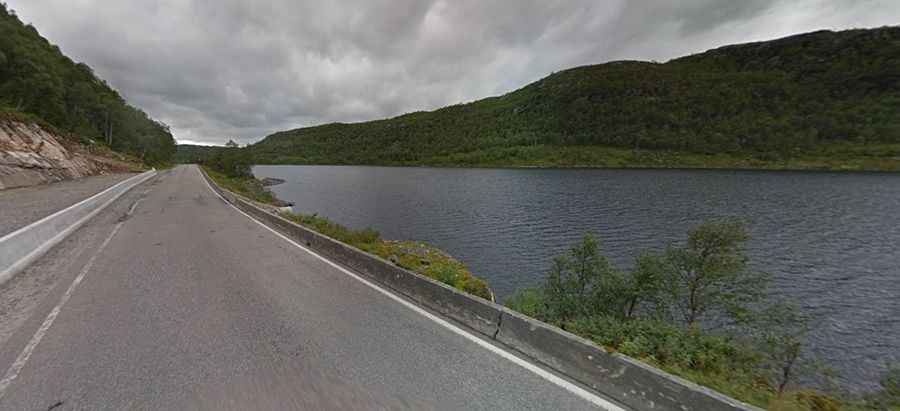
As shown in the image_e7f51d.jpg layout, the asphalt surface is fully paved but narrow, measuring under 6 meters wide. The lane lacks a painted white centerline, utilizing only a single yellow line to separate traffic on a platform with zero paved shoulders. The alignment closely hugs the water margins of Sinnesvatn, Fidjelandsvatnet, and Ortevatnet, pinning the wheels between vertical rock cutouts on one side and unprotected lake drop-offs on the other. Blind curves are frequent, and free-roaming sheep on the asphalt are a continuous hazard between June and September.
What are the winter hazards near Fidjeland?
The FV975 stays open year-round to give ski traffic access to the resorts around Fidjeland. Because the tarmac runs at water level along the lake shores, humidity levels are constantly high. During spring and autumn shoulder seasons, this moisture creates immediate black ice sheets on the asphalt as soon as temperatures drop past 0°C. Heavy winter blizzards pile snowdrifts against the rock walls, requiring studded tires or high-grade winter treads to maintain traction on the unlit slopes between the mountain villages.