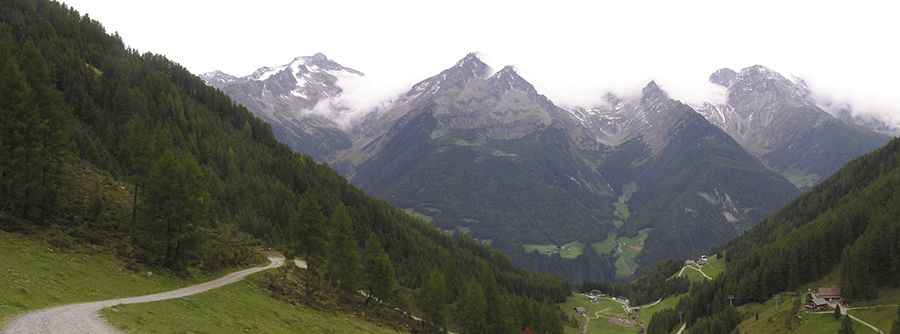
Is the road to Picco Palù in South Tyrol difficult to drive?

Reaching the summit of Picco Palù (Großer Moosstock) is a brutal exercise in high-altitude traction. At 2,490m (8,169ft) above sea level, this peak in the Italian province of South Tyrol sits within the rugged Vedrette di Ries – Aurina Natural Park. This isn't a mountain pass for a summer outing; it’s a steep, unforgiving ski resort service road that carves through the Venediger Group. If you aren't driving a serious 4x4 with low-range gears, the mountain will stop you long before you reach the top.

Picco Palù-Großer Moosstock
Road facts: Picco Palù (Großer Moosstock)
Location South Tyrol, Italy
Elevation 2,490m (8,169ft)
Length 10.8 km (6.7 miles)
Avg. Gradient 13.48%
Max Gradient 20%

How long is the road to Picco Palù?

The climb starts from Steinhaus (Valle Aurina) and stretches for 10.8 km (6.7 miles) of relentless vertical gain. Over this short distance, you are climbing a staggering 1,456 meters. The average gradient is a punishing 13.48%, but that’s just the average. Many sections hit 20%, especially as you navigate the service trails for the chairlifts. It’s a slow, grueling grind where your cooling system will be pushed to its absolute limit as you crawl up the face of the mountain in first or second gear.

Is the road to Picco Palù unpaved?

The entire track is strictly unpaved and consists of loose gravel and large, jagged stones. As a ski station service road, it is designed for heavy machinery, not passenger cars. In the lower sections, the dirt might be packed, but as you climb higher toward 2,490 meters, the surface becomes increasingly rocky and unstable. The "road" is often just a cleared path through the scree slopes. If your tires aren't built for sharp rocks, you risk a puncture miles away from any help. High clearance is mandatory; otherwise, you’ll be leaving pieces of your undercarriage on the Tyrolean peaks.

What are the hazards when driving to Picco Palù?

The main danger at Großer Moosstock is the sheer steepness combined with the loose surface. On a 20% incline, if you lose momentum or your wheels start to spin on the gravel, it is very difficult to get moving again without sliding backward. There are zero guardrails, and the track narrows significantly in the upper parts where it skirts the edge of the glacial valleys. Visibility can also disappear in seconds as alpine clouds roll over the Venediger peaks. This route is only accessible during a very narrow window in late August when the snow finally clears, but even then, a sudden summer storm can turn the dust into a slick, muddy trap.

Is the drive to Picco Palù worth it?

The views of the Aurina Valley from the summit are world-class, but your focus will likely be on the track ahead of your hood. This is a technical drive that requires constant attention to your line to avoid the biggest ruts and rocks. Ensure your brakes are in perfect condition for the descent—dropping 1,450 meters in just 10 kilometers will make even the best brakes smoke if you don't use heavy engine braking. In South Tyrol, the mountains are built on a different scale. Respect the grade, trust your low-range gears, and focus on the road. The Picco Palù doesn't offer second chances to those who underestimate the incline.

Driving the Valle Aurina high country is a reminder that the best views are earned through grit and low gears. The road to Picco Palù is a raw, unpolished experience that takes you to the very edge of the alpine wilderness. Check your fuel, bring an extra spare, and stay sharp. The climb is a battle, but the silence at the top is the ultimate reward. Stay alert and keep climbing.


Pic: Viktor Freyer