The steep private road to Monte Ray: An engineering feat in the Gesso Valley
Monte Ray is a high mountain peak reaching an elevation of 1,846m (6,056ft) above sea level, located in the Province of Cuneo, Piedmont, Italy. Situated near the French border, the road to the summit offers a technical and incredibly steep ascent through the scenic Valle Gesso.
| Road facts: Monte Ray | |
|---|---|
| Location | Province of Cuneo, Italy |
| Length | 10.7 km (6.6 miles) |
| Elevation Gain | 912 m |
| Average Gradient | 8.52% |
| Hairpin Turns | 18 |
| Surface | Paved with loose gravel |
What is the route to Monte Ray?
The climb starts from Strada Provinciale San Giacomo, near the village of Entracque, at an elevation of 934m. The road, officially named Strada Comunale Monte Rai, was originally constructed by an electric company to access mountain infrastructure. It winds up the slope over a total distance of 10.7 km.
Is the road to Monte Ray open to the public?
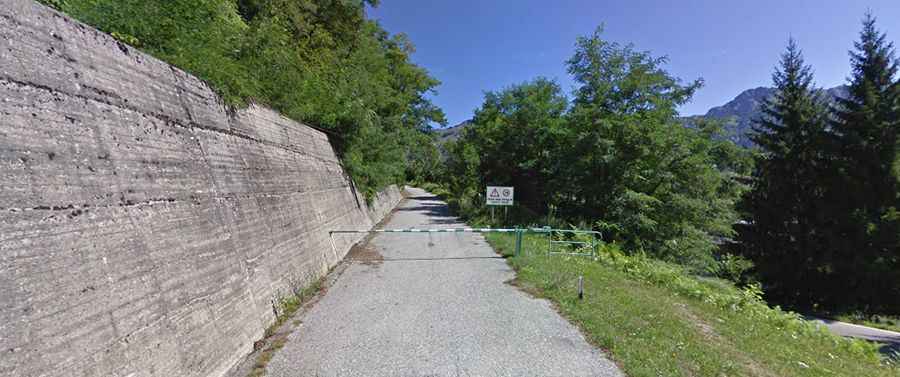
No, the road is currently closed to private motor vehicles. Access is blocked with a barrier at the start of the ascent. While it remains a legendary route for those interested in mountain engineering and high-altitude service roads, driving to the summit is restricted to authorized personnel.
How steep is the climb to Monte Ray?
The ascent is notoriously difficult, with an average gradient of 8.52%. Over the 10.7 km course, you gain 912 meters in elevation. Drivers and cyclists can expect several extreme sections where the gradient hits 12%, making it one of the most demanding climbs in the Piedmont region.
What is the road surface like?
The road is mostly paved, which is common for service tracks built by utility companies in the Italian Alps. However, users should expect loose gravel scattered across the asphalt, especially in the corners. The climb features a total of 18 hairpin turns that tightly snake up the mountain side.
Why is the Monte Ray road famous?
The road is a prime example of high-altitude infrastructure in the Valle Gesso. Its proximity to the French border and the stark Alpine landscape make it a visually stunning route. Despite the vehicle restrictions, it remains a point of interest for overlanders and mountain enthusiasts exploring the Cuneo province.