Driving the rugged track to Coletto di Laus: A rocky climb in Cuneo
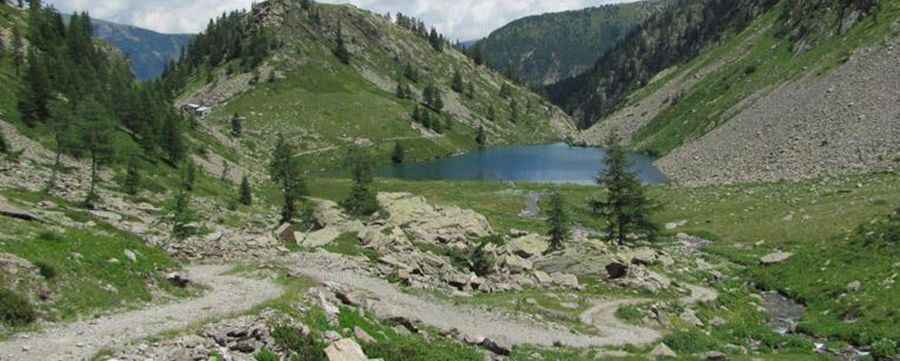
Coletto di Laus is a mountain pass at an elevation of 1,948 meters (6,391 ft) above sea level, located in the Maritime Alps within the Province of Cuneo, Piedmont, Italy. Starting near San Bernolfo in the Bagni di Vinadio valley, the unpaved track climbs toward Lago di San Bernolfo and Rifugio De Alexandris-Tomasione (Rifugio Laus).
| Road facts: Coletto di Laus | |
|---|---|
| Location | Vinadio, Cuneo, Piedmont (Italy) |
| Elevation | 1,948 m (6,391 ft) |
| Surface | Unpaved (Large stones, scree, and earth) |
| Access Restrictions | Restricted near summit (Motorized traffic limits apply) |
| Vehicle Required | High-clearance 4x4 |
Where is the road to Coletto di Laus located?
The track begins past the village of San Bernolfo in the upper Vallone de San Bernolfo, near Vinadio. The unpaved route climbs through forested slopes and rocky glades in the Maritime Alps toward the mountain refuge and lake at 1,948 meters elevation.
What are the driving conditions on the Coletto di Laus track?
The route is entirely unpaved, consisting of large embedded rocks, loose glacial scree, and deep water-carved ruts. Tight hairpin turns along steep ramps require low-range four-wheel drive and high ground clearance to prevent underbody impacts on exposed boulders.
What hazards exist on the Coletto di Laus mountain road?
The narrow single-lane track lacks guardrails along exposed drops, with extremely limited turnarounds. Spring snowmelt washes loose stones and rockfall debris onto the roadbed, while summer storms make the steep dirt sectors slick. On the descent back toward San Bernolfo, drivers must select low gears to engine brake and prevent brake pads from overheating.
Is the road to Coletto di Laus open year-round?
No. At an elevation of 1,948 meters, heavy snow buries the track from October through June. Snowplows do not clear this unpaved mountain trail, leaving it impassable during winter and late spring. Local environmental restrictions also limit motorized vehicle access on the final stretch leading directly to Lago di San Bernolfo.
Pic: http://www.rifugiolaus.it