How steep is the road to Passo di Pradaccio in the Italian Apennines?
Passo di Pradaccio, also known as Passo del Lagadello, is a high mountain pass reaching an elevation of 1,617m (5,305ft) above sea level, situated on the rugged boundary between Tuscany and Emilia-Romagna in central Italy. The road over the pass, the Strada Provinciale 71 (SP71), is a notorious climb that connects the Garfagnana region with the high ridges of the Apennines. Despite being asphalted, the route is feared by drivers for its narrow sections and some of the steepest ramps in Italy, making it a technical challenge for any vehicle's cooling system and brakes.
| Road facts: Passo di Pradaccio (SP71) | |
|---|---|
| Location | Tuscany / Emilia-Romagna border (Italy) |
| Elevation | 1,617 m (5,305 ft) |
| Length | 15.0 km (9.3 miles) from Campori |
| Max Gradient | 17.7% |
| Hairpin Turns | 22 |
What makes the SP71 to Passo di Pradaccio one of the steepest roads in Italy?
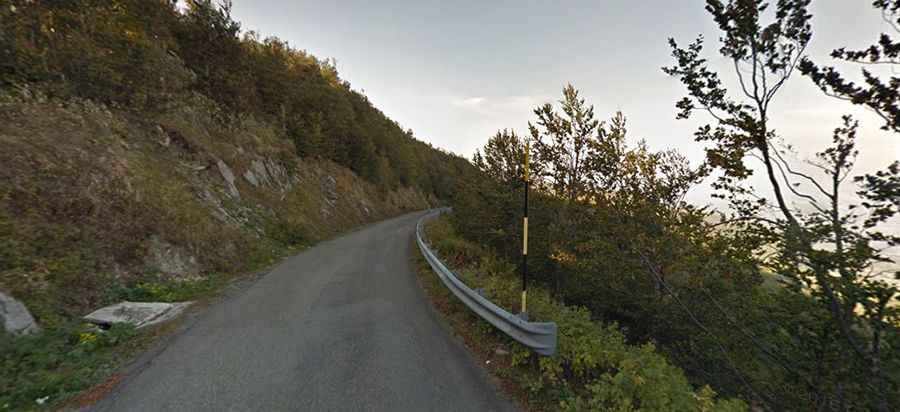
The drive covers 15.0 km (9.3 miles), running south-north from the village of Campori in the Province of Lucca toward the junction with the Passo delle Radici. While the road is paved, the engineering follows the natural folds of the mountain, leading to a relentless series of ramps where the gradient hits a brutal 17.7%. This isn't just a steady climb; it is a sequence of 22 tight hairpin turns that force you to manage your gears constantly. On the narrowest sections, there is barely enough room for two small cars to pass, and the sheer steepness means that restarting a vehicle on the uphill sections is a major test for your clutch and tires.
What are the main hazards when driving the Passo di Pradaccio?
The primary hazard of the SP71 is the lack of width combined with the extreme incline. In several sectors, the asphalt is worn and narrow, with significant drop-offs and very little protection. Meeting oncoming traffic—especially local furgonetes or delivery trucks—can turn into a "hairy" situation where someone must reverse on a double-digit gradient. The road is also prone to fallen leaves and debris during the autumn, which can make the 17.7% ramps incredibly slippery even for a car with good tires. At the summit, there is only a tiny parking lot, reflecting the primitive and non-touristic nature of this high-altitude pass.
Is the road to Passo di Pradaccio accessible during the winter?
Given its elevation of 1,617m and its location on the hydrological divide, the Passo di Pradaccio is heavily affected by winter weather. Snowfalls can be intense, and unlike the main provincial arteries, the SP71 is not always the first to be cleared. Ice is a constant threat on the 22 hairpin turns, where even a light dusting can make the 17.7% descent a lethal slide. Drivers should be extremely cautious from November to April, as the shaded sections of the forest remain frozen long after the sun has come out. Always check the local forecast before leaving Campori, as a sudden storm can turn this steep road into an impassable obstacle in minutes.
What mechanical preparation is needed for the Garfagnana highlands?
Before attempting the Passo di Pradaccio, you must ensure your vehicle's cooling system is in perfect shape. Climbing 15 km with such extreme gradients means the engine is under constant load with limited airflow due to the slow speed on the hairpins. Equally important are the brakes for the descent back towards Tuscany or the Passo delle Radici; the 17.7% sections will cause rapid heat buildup, so engine braking is mandatory to prevent brake fade. This is a remote sector of the Apenins where roadside assistance is miles away, so having a reliable vehicle and fresh fluids is the only way to tackle this hidden wall of Italy safely.