Passo Pertica: Driving the 16 hairpins from Giazza to the High Lessinia
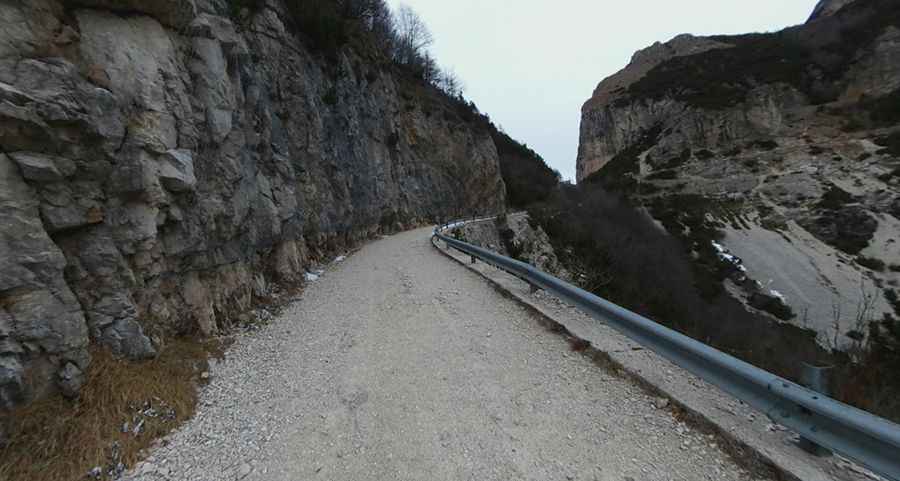
Passo Pertica is a high mountain pass at an elevation of 1,522 meters (4,993 ft) above sea level, located in the Province of Verona in northern Italy. The road to the summit, starting from Giazza, is a technical 9.7-kilometer climb that scales the steep limestone cliffs of the Lessinia Regional Nature Park. The physical reality of this route involves managing a sudden transition from asphalt to a raw gravel surface at the Rifugio Revolto, where the final 2.9 kilometers require a high-clearance vehicle to navigate 16 sharp hairpin turns with a punishing 8.43% average gradient.
| Road facts: Passo Pertica (Lessinia) | |
|---|---|
| Location | Province of Verona, Italy |
| Elevation | 1,522m (4,993ft) |
| Length | 9.7 km (6 miles) from Giazza |
| Hairpin Turns | 16 |
How challenging is the 16-hairpin climb to Passo Pertica?
The journey from Giazza is a high-load mechanical effort. Over a distance of just 9.7 kilometers, you gain 818 meters of elevation, which keeps the motor under constant stress. The asphalt ends abruptly at Rifugio Revolto, and you are left with 2.9 kilometers of loose stones and compact dirt. The 16 hairpin turns are exceptionally tight, and on this unpaved upper section, maintaining traction is a struggle. You’ll need to work the steering wheel hard while the tires fight for grip on the gravel ramps, where any loss of momentum can make restarting the car a thermal torture test for your clutch and your drivetrain.
What are the hazards on the unpaved road to Rifugio Passo Pertica?
The primary hazard on Passo Pertica is the combination of a narrow track and vertical exposure. The upper gravel section has no guard rails, only rustic wooden fences that offer zero protection if your wheels slip. The road is barely wide enough for one car; meeting oncoming traffic on the 16 hairpins forces one driver to reverse on a steep, loose surface with a deep drop-off just centimeters away. After rains, the dirt becomes "greasy," and the ruts can easily ground a standard car, making high ground clearance a physical necessity to reach the summit refuge without smashing your oil pan or exhaust system.
Is the Passo Pertica road open during the winter months?
Accessibility is strictly dictated by the Alpine weather. Due to its northern exposure and high altitude, the road beyond Rifugio Revolto is frequently blocked by snow and ice that lingers well into the spring. The 8% gradient turns the unpaved stretch into a friction-less slide zone where even 4x4 units can lose control. There is no snow clearance on the final 2.9 km, turning the pass into a dead end for motor vehicles during the winter. Always check the Verona province forecast; a sudden thunderstorm can wash out parts of the gravel track, making the hairpins impassable due to deep erosion and fallen rocks from the limestone walls.
What mechanical prep is needed for the 1,522m Lessinia climb?
Before leaving Giazza, verify that your cooling system is flushed and the fan kicks in correctly; the low-speed climb will push your motor's temperature to the red line. Check your brake pads and fluid levels, as the descent from Passo Pertica is a relentless grind on the calipers through 16 sharp turns. Your tires must have enough tread to handle the transition from smooth asphalt to sharp mountain gravel without spinning out. Carry a basic toolkit and a spare wheel, as the vibration on the upper track will test every bolt and seal on your vehicle. In this rugged corner of the Venetian Prealps, your car's mechanical health is the only buffer against the harsh reality of the high-altitude hairpins.
Pic: Filippo Crosara