Driving the rugged 4x4 road to Colle de Carsene in the Alps
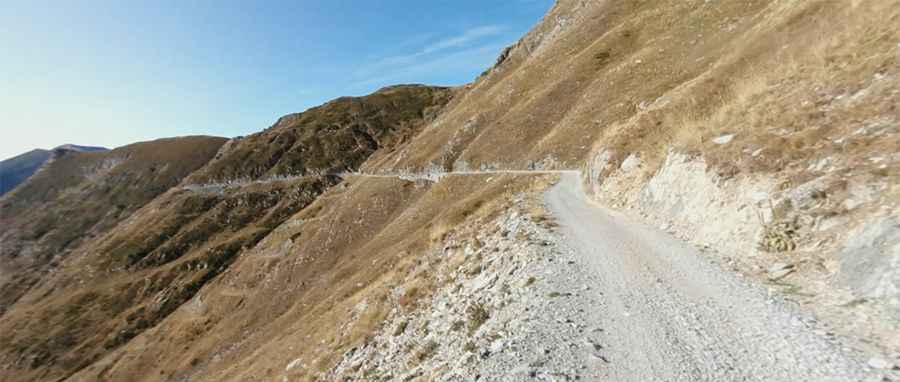
Colle de Carsene is a high mountain pass at an elevation of 2,221 meters (7,286 ft) above sea level, straddling the border between France and Italy in the Cottian Alps. This pass is a key segment of the famous Via del Sale, an ancient salt route transformed into a military road during the Second World War. Today, it is a technical challenge for off-roaders, where the comfort of modern SUV driving is replaced by the physical reality of jagged rocks, steep unprotected ledges, and the unpredictable weather of the high alpine ridges.
| Road facts: Colle de Carsene | |
|---|---|
| Location | Cottian Alps, France-Italy border |
| Elevation | 2,221m (7,286ft) |
| Route | Via del Sale |
| Season | Closed Nov 1 to March 31 |
How difficult is the road to Colle de Carsene?
The road traversing the pass is entirely unpaved and consists of a brutal mix of loose gravel and large, embedded rocks. This is a high-altitude military track where the gradients are sustained and the surface is in a constant state of erosion. While often marketed as an SUV adventure, a high-clearance 4x4 with reinforced tires is the only safe way to manage the logistics of the climb. The path is narrow, carved into the side of the mountain with vertical drops that have zero safety barriers. Navigating the tighter switchbacks requires precision, as the thin air at 2,221 meters will noticeably reduce your engine's torque, forcing you to rely on low-range gearing to maintain traction on the loose shale.
What are the main hazards on the Via del Sale near Carsene?
The primary hazard at Colle de Carsene is the volatile weather of the Cottian Alps. Thick fog can roll in from the French side in minutes, reducing visibility to just a few meters on a track that is often barely wider than a furgoneta. The road surface is "rocky and bumpy," creating high-frequency vibrations that can loosen bolts and stress the suspension. Furthermore, the military origins of the road mean it follows the highest ridges, making it extremely exposed to high winds and lightning during afternoon storms. The risk of rockfalls is a physical reality, especially after the spring snowmelt, which can block the track and force a dangerous multi-kilometer reverse maneuver to find a turning point.
Is the road to Colle de Carsene open year-round?
No. Due to its extreme altitude and its position on the border ridges, the road is strictly closed from November 1 to March 31 every year. However, snow can block the trail well into June or early July depending on the year's accumulation. During the open season, access is often regulated, and some sections of the Via del Sale require a permit or a toll. Even when officially open, patches of hard-packed snow can remain in the shadows of the north-facing slopes, turning a simple crossing into a technical recovery operation if your vehicle gets high-centered.
What mechanical prep is needed for the high Alps military roads?
Before entering the Via del Sale, verify that your 4WD system and low-range gearbox are in perfect order. The climb to 2,221 meters puts an immense thermal load on the radiator, especially at slow crawl speeds. Check your tire sidewalls for damage; the sharp limestone and granite of the Carsene pass are notorious for shredding standard highway rubber. On the long, rocky descents, do not ride your brakes. Stay in a low gear to let engine braking hold the weight of your vehicle and avoid boiling your brake fluid. Carry at least 15 liters of extra water, a full-sized spare, and recovery gear, as a mechanical failure at this altitude is a survival situation in a high-isolation sector.
Pic: Matteo Quaglia