Driving the forgotten military road to Monte Toraro: A Cold War relic
Located in the Venetian Prealps, in the Province of Vicenza, the road to the summit of Monte Toraro is a ghost track that whispers of Cold War tensions and military secrecy. Reaching an elevation of 1,890m (6,200ft) above sea level, this route was once a vital artery for the Italian Air Force and NATO. Today, it is a decaying strip of asphalt that is slowly being reclaimed by the mountain, offering a high-stakes journey through one of the most strategic sectors of the Triveneto Alps.
| Road facts: Monte Toraro | |
|---|---|
| Location | Vicenza, Veneto (Italy) |
| Elevation | 1,890 m (6,200 ft) |
| Length | 2 km (from Valbona Pass) |
| Max Gradient | 16% |
| Status | Paved / Severely Degraded |
How challenging is the 16% climb to the Monte Toraro summit?
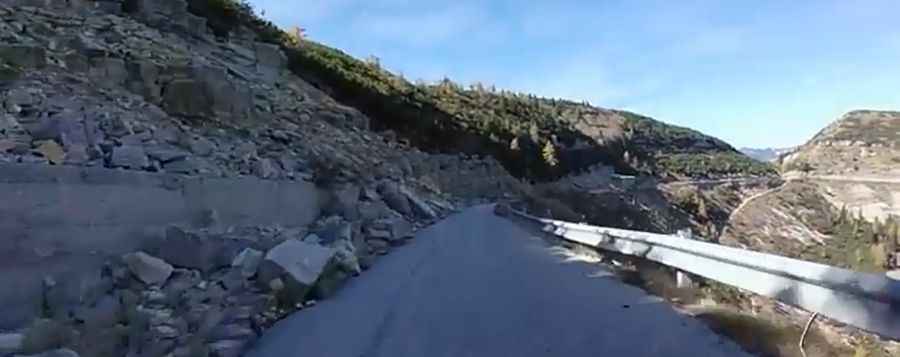
The 2 km ascent starting from the Valbona Pass is a short but brutal exercise in vehicle control. Although the road was once fully paved to support heavy military equipment, the total lack of maintenance has left the surface in a disastrous state. The average gradient of 5.85% is misleading; the track features devastating ramps with a maximum slope of 16%. As seen in recent surveys, the asphalt is narrow and shattered, with massive rockfalls frequently blocking large portions of the path. Navigating these sections requires high-clearance and extreme caution, as the debris consists of jagged limestone that can easily destroy a standard tire.
What are the hazards of the former NATO missile base road?
Monte Toraro's military history, from WWI batteries to the 1960s Nike missile sites, has left behind a rugged infrastructure that is now falling apart. The primary hazard is the instability of the mountain face; the road is cut into a steep slope where landslides have crushed the metal guardrails and covered the pavement with loose scree. Operating here means dealing with unprotected drops and the risk of further rock collapse. The summit, which once housed complex radars and command posts connected to Base Tuono, is now a desolate square of concrete. On clear days, the view extends to the Venice Lagoon, but the reality under your tires is one of crumbling edges and soft, eroding shoulders that offer no safety margin.
What is the best mechanical strategy for the Venetian Prealps?
Reaching the 1,890m peak of Monte Toraro demands a careful evaluation of your vehicle's undercarriage. The 16% ramps require steady torque delivery, but the main challenge is dodging the constant debris without sliding toward the cliff. Because the road is officially closed to unauthorized private vehicles, there is zero assistance if you suffer a mechanical failure or a puncture from the broken asphalt. On the descent back to Valbona, you must use heavy engine braking to manage the steepness, as the rough surface will make your vehicle bounce, reducing brake effectiveness. In this part of the Alps, the road is a relic—respect the decay, watch for falling rocks, and ensure your tires can handle the razor-sharp debris.
Pic&video: rics1299