Muro di Campeggio: The brutal 29% asphalt wall near Bologna
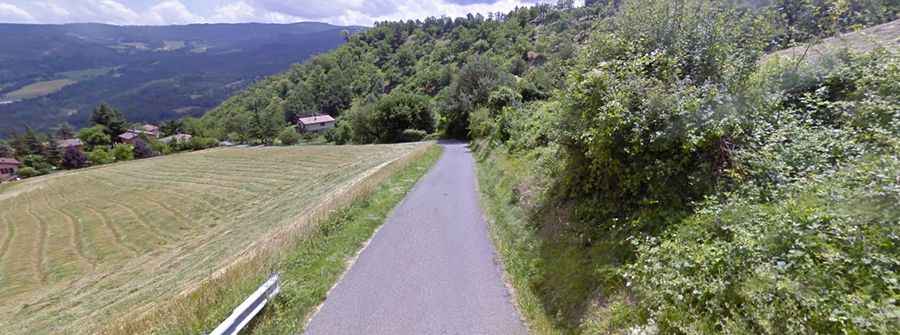
Muro di Campeggio, officially part of the Via Sumbilla, is one of the steepest paved roads in Italy, located in the Metropolitan City of Bologna, Emilia-Romagna. This isn't a standard mountain pass; it is a vertical wall of asphalt that scales the hills north of Pergoloso. The physical reality of driving this route involves managing extreme inclines that hit a maximum gradient of 29%, a figure that pushes standard engine torque and tire friction to their absolute mechanical limits. At such angles, the car's weight shifts entirely to the rear axle, making front-wheel-drive traction a major logistical challenge.
| Road facts: Muro di Campeggio (Via Sumbilla) | |
|---|---|
| Location | Bologna, Emilia-Romagna, Italy |
| Length | ~2.0 km (1.2 miles) |
| Average Gradient | 15.9% |
| Max Gradient | 29.0% |
How challenging is the 29% incline of Muro di Campeggio?
The 2-kilometer climb from the valley floor is a high-intensity mechanical operation. While it’s shorter than the Muro di Sormano, the Campeggio ramps are even more aggressive. Sustaining a 15.9% average requires the vehicle to stay in first gear throughout the entire ascent. If you are forced to stop on one of the 29% ramps, restarting is almost impossible without burning the clutch or spinning the tires until they smoke. The physical demand on the cooling system is extreme, as there is very little airflow at the low speeds required to crawl up such a vertical grade without stalling the motor.
What are the hazards of driving the Via Sumbilla wall?
The primary hazard on Muro di Campeggio is the total lack of margin for error on a narrow, unprotected track. The road winds through thick forest with no guardrails, meaning a loss of traction on the steepest hairpins can send the vehicle backward into the trees. After rain or during the autumn leaf fall, the asphalt becomes "greasy," and 2WD cars will simply lose the battle against gravity. The descent is even more dangerous; relying on the brakes alone on a 29% drop will boil the fluid in seconds. You have to use the shortest gear possible and "feather" the brakes to avoid a total mechanical failure that would leave you without stopping power on a vertical slope.
What is the logistical reality of the Bologna hill climbs?
Driving the Via Sumbilla requires a vehicle with massive low-end torque and perfect brakes. The logistics of the route are dictated by local agricultural traffic; meeting a tractor on a 29% ramp means someone has to reverse, a maneuver that is physically taxing for the transmission and high-risk for the driver's visibility. There is no lighting and the asphalt is often littered with forest debris that can compromise grip. Because the road is under a heavy canopy, moisture stays on the ground for hours, turning the steepest ramps into a friction-less trap even on sunny days.
What mechanical prep is needed for the Muro di Campeggio?
Before you even think about putting the car in gear near Pergoloso, check your brake fluid—it must be fresh and at the correct level to handle the heat of the descent. Verify that your tires have maximum tread depth; on a 29% grade, every millimeter of rubber counts to keep the car from sliding. Check your cooling fan and radiator, as the engine will be screaming in first gear with almost no forward speed to cool it down. Ensure your handbrake is adjusted perfectly; if you have to stop on the Muro, you’ll need it to hold the car while you balance the clutch. In the hills of Bologna, your car's mechanical integrity is the only thing keeping you from rolling backward into the ravine.