How to drive the Marble Road up Monte Corchia in Tuscany?
The Marble Road to Monte Corchia is a dramatic 8.8 km (5.4 miles) unpaved industrial track located in the Province of Lucca, Tuscany, Italy. Climbing the northern slopes of Monte Corchia in the Apuan Alps, the road terminates at an elevation of 1,440 meters (4,725 ft) at Cava dei Tavolini (Cave del Retrocorchia).
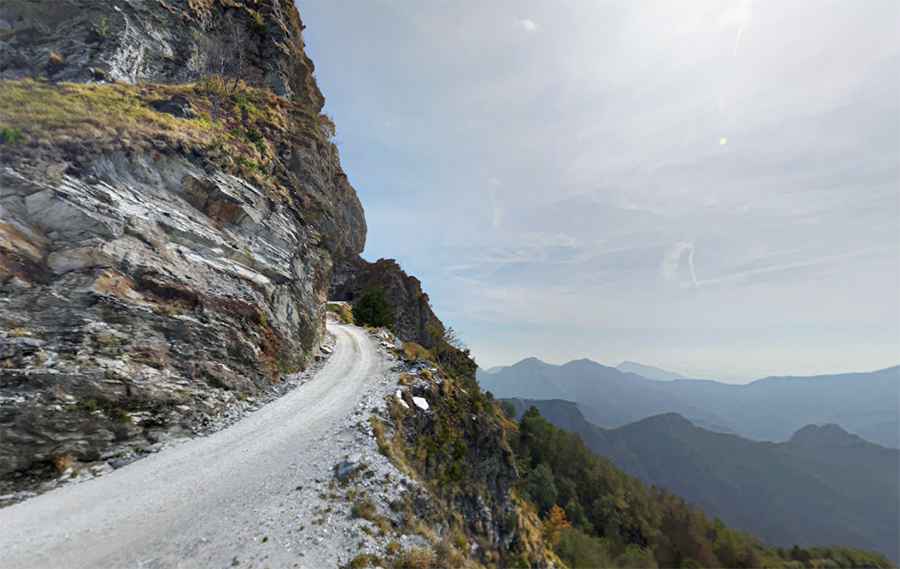
| Road facts: Marble Road to Monte Corchia | |
|---|---|
| Location | Province of Lucca, Tuscany (Italy) |
| Length | 8.8 km (5.4 miles) |
| Elevation at Summit | 1,440 m (4,725 ft) |
| Elevation Gain | 947 m (3,106 ft) |
| Average Gradient | 10.76% |
| Surface | 100% unpaved (crushed marble, loose rock, carved bedrock) |
| Key Features | 16 hairpin turns, steep quarry ramps, active heavy machinery traffic |
Where is the Marble Road to Monte Corchia located?
The road begins near Terrinca in the municipality of Stazzema, within the Apuan Alps Regional Park in northern Tuscany. It ascends steep rock faces to reach the high-altitude marble extraction site at Cava dei Tavolini.
Is the Marble Road up Monte Corchia paved?
No, the track is 100% unpaved. The surface is carved directly into the white limestone and marble bedrock, covered with coarse marble gravel, loose stones, and deep ruts generated by heavy haul trucks.
Is it an access track for marble quarries?
Yes. Officially classified in Italy as a strada marmifera (marble road), it was built exclusively to provide workers, heavy equipment, and haul trucks access to upper quarry terraces. Historically, marble blocks were transported down these mountainsides on wooden sleds (lizzatura) before the route was expanded into a track for heavy industrial vehicles.
How long and steep is the road to Monte Corchia?
Starting from Terrinca, the ascent spans 8.8 km (5.4 miles) with a continuous elevation gain of 947 meters. The average gradient is 10.76%, featuring 16 hairpin turns and extreme, sustained ramps that demand low-range gear control and high ground clearance.
Who uses the Marble Road to Monte Corchia today?
While it remains an operational quarry road with active heavy machinery traffic, the route's dramatic scenery—cut directly into sheer white marble walls—draws experienced 4x4 drivers, mountain bikers, and hikers navigating the Apuan Alps.
Pic: Alex L