How to drive the steep chairlift track to Testa Bassa?
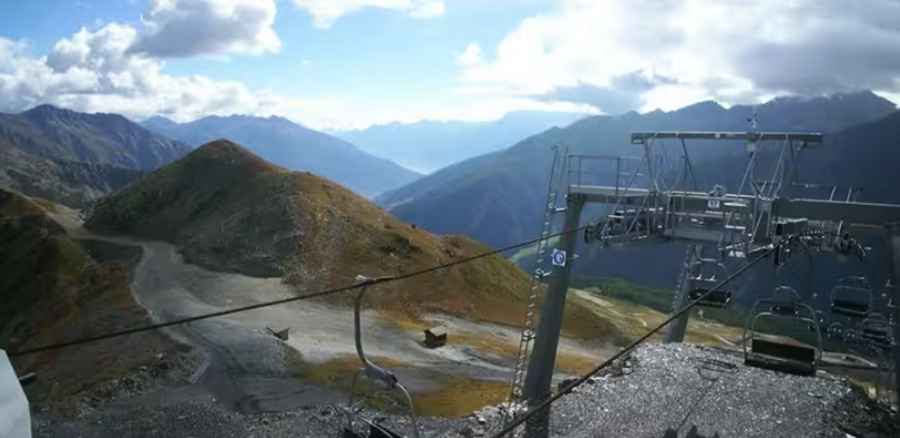
Testa Bassa is a high mountain peak at an elevation of 2,454m (8,051ft) above sea level, located in the Aosta Valley region of the Italian Alps. The route to the summit is a rugged service road primarily used for chairlift maintenance.
| Road facts: Testa Bassa | |
|---|---|
| Location | Aosta Valley, Italy (Pennine Alps) |
| Elevation | 2,454 m (8,051 ft) |
| Average Gradient | 10.02% (with steeper ramps) |
| Vehicle Requirement | High-clearance 4x4 with low-range |
What is the technical condition of the road from Arp du Jeu?
The ascent begins at Arp du Jeu and covers 3.7 km with an elevation gain of 371 meters. This is a chairlift access trail, meaning it was not designed for public transit but for heavy maintenance machinery. The surface is totally unpaved, with loose gravel and large shale fragments. The average gradient of 10.02% is deceptive, as several ramps exceed this figure, requiring a 4x4 vehicle with a low-range gearbox to maintain steady traction without spinning the tires on the loose debris.
How to navigate the junction to Testa Crevacol?
Near the summit, the route become more complex. A minor gravel spur branches off to climb toward Testa Crevacol (also known as Tête de Crévacol). According to the technical guide for Testa Crevacol, these high-altitude maintenance tracks are prone to rapid erosion. The switchbacks near the top are extremely tight, often requiring three-point turns for long-wheelbase vehicles. Drivers must stay alert for service vehicles and hikers, as the track is narrow and has no safety barriers over steep alpine drops.
When is the best window for the Testa Bassa ascent?
Due to its location in the Pennine Alps, the road to Testa Bassa is impassable from October to June. Snow accumulation on the ski slopes often blocks the track well into early summer. Even in July and August, the weather can shift from clear skies to heavy thunderstorms in minutes. Using engine braking in a low gear is the only way to prevent the pads from glazing during the return trip to Arp du Jeu.
Pic: Emanuele Bredy