How to drive the Great Dolomite Road in Italy?
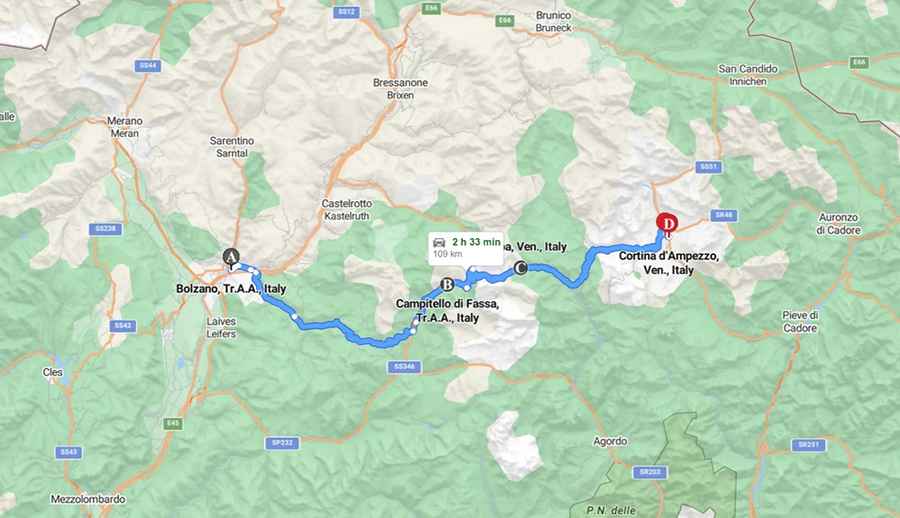
The Great Dolomite Road (Grande Strada delle Dolomiti) is a high-altitude alpine drive in northern Italy. Spanning approximately 110 kilometers, the route is a technical sequence of three different roads: the SS241 from Cardano to Vigo di Fassa, the SS48 through the Val di Fassa, and the SR48 in the Belluno province, ending in Cortina d'Ampezzo.
| Road facts: Great Dolomite Road (SS241/SS48/SR48) | |
|---|---|
| Logistics | Connects Bolzano (Cardano) to Cortina |
| Length | ~110 km (68 miles) |
| Key Passes | Costalunga, Pordoi, Falzarego |
| Max Elevation | 2,239 m (Passo Pordoi) |
| Surface | Fully Paved |
How is the route of the Great Dolomite Road?
The Great Dolomite Road starts at Cardano (Kardaun) on the SS241. This first section climbs through the Eggental valley toward Passo di Costalunga (1,752m). At Vigo di Fassa, the route joins the SS48, heading northeast toward Canazei. The most technical sector involves the 2,239m Passo Pordoi, featuring 33 tight hairpins on the western ascent. After crossing into the Belluno province, the road becomes the SR48, traversing Passo Falzarego (2,105m) before the final descent into Cortina d'Ampezzo. High-clearance vehicles are not required, but braking systems must be in optimal condition for the sustained alpine gradients.
What are the technical hazards on the Great Dolomite Road?
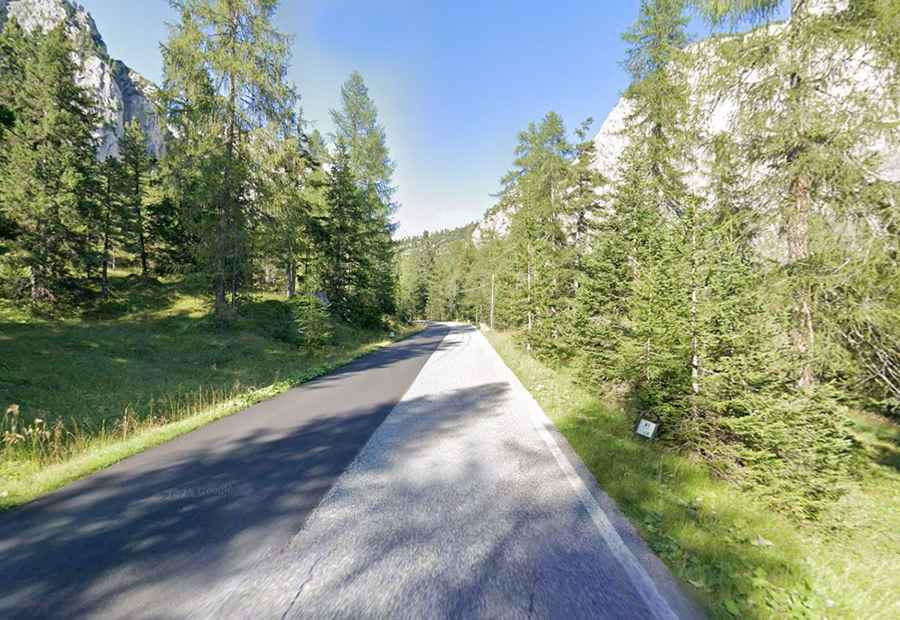
The primary hazards on the Great Dolomite Road are brake fade and extreme congestion. The 110 km route features gradients reaching 12%, which require continuous engine braking during the descents from Pordoi and Falzarego. The road width is inconsistent; several sectors near the Karersee (Lake Carezza) and the Falzarego galleries have limited lateral clearance. During the summer, the density of cyclists and tour buses on the narrow SS48 and SR48 sectors makes overtaking impossible and requires constant vigilance in blind turns. Rockfall protection is present, but heavy rain can still bring debris onto the asphalt.
Is the Great Dolomite Road open in winter?
While the Great Dolomite Road is a primary logistical link and usually remains open, Passo Pordoi and Passo Falzarego are subject to temporary closures during heavy snow or high avalanche risk. Between November 15th and April 15th, winter tires or snow chains are mandatory for the entire 110 km stretch. At elevations above 2,000 meters, black ice is a common hazard in shaded turns, particularly on the northern slopes of the Pordoi. Maintenance crews are active, but the use of road salt can reduce tire friction on the tighter hairpins of the SR48 section.
How to drive the 110 km Great Dolomite Road?
Driving the Great Dolomite Road requires a disciplined gear strategy. On the SS241 ascent, monitor engine temperature due to the sustained climb from Bolzano. When navigating the 33 hairpins of Passo Pordoi on the SS48, stay within the torque band to avoid losing momentum. On the SR48 descent toward Cortina, engine braking is mandatory to prevent service brake overheating. Large motorhomes must be aware of vertical clearance in the tunnels near Falzarego. Before starting the full transit, verify all fluid levels and ensure your brake pads have sufficient lining for over 2,000 meters of total vertical descent.