Driving the extreme F959 road to the ghost farm of Viðfjörður
The F959, also known as Viðfjarðarvegur, is a brutal high-mountain track located in the Eastern Region of Iceland. Stretching south from Norðfjörður bay, this road is a gateway to one of the most remote and isolated spots in the country: the abandoned farmhouse of Viðfjörður. This isn't just a drive; it's a technical challenge through a landscape on one of the most demanding F-Roads in Iceland. Here, asphalt is a distant memory, and the physical reality of large boulders, deep ruts, and unbridged river crossings dominates every kilometer. To drive here is to accept a total lack of network or support in an area where local legends speak of centuries of strange incidents and hauntings.
| Road facts: F959 (Viðfjarðarvegur) | |
|---|---|
| Location | Eastern Region, Iceland |
| Length | 8.1 km (5.0 miles) |
| Vehicle Required | Full-size 4x4 with high fording capacity |
| Season | Late June to early September |
How difficult is the F959 to Viðfjörður?
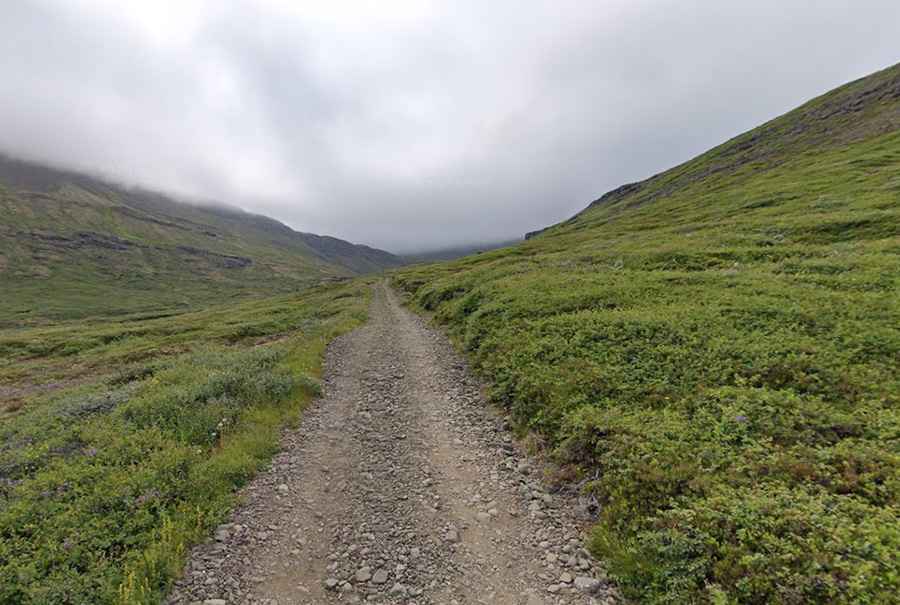
The 8.1-kilometer journey starting from Road 954 is a technical grind. As seen in the desolate terrain of the Eastern Region, the surface is composed of large, fragmented stones and loose debris. This road is strictly for full-size 4x4 vehicles with high ground clearance. You will encounter massive potholes and ruts that have been carved by the extreme Icelandic weather. Attempting this track in a small passenger car is not only irresponsible but life-threatening; the risk of bottoming out on a boulder or getting trapped in a riverbed is a constant reality. Every meter of the F959 requires careful gear selection to maintain momentum without destroying your suspension.
What are the main hazards on the Viðfjarðarvegur track?
The primary hazard of the F959 is its total isolation and the unbridged river crossings. You must have significant fording capacity; the water levels in the local streams can change in minutes depending on rain or glacial melt. If you stall in the middle of a crossing, there is no cell phone service and zero passing traffic to pull you out. The track is exceptionally remote, leading to a farmhouse abandoned since 1955. Furthermore, the high-altitude mists of the fjords can drop visibility to just a few meters, hiding the deep ruts and the sharp boulders that litter the roadbed. It is a high-load environment where a simple mechanical failure can leave you stranded for days.
Is the F959 road open year-round?
No. Like most F-Roads, the F959 is only open during the short summer months, typically between late June and early September. The rest of the year, the track is buried under snow and mud, making it completely impassable. Even during the open season, the road is subject to sudden closures if the water crossings become too deep or the mud too thick for even 4x4 transit. Maintenance works are practically non-existent, so the condition of the track changes every week based on the weather. Always check the river conditions before committing your vehicle to this solitary journey.
What mechanical prep is needed for the F959 crossing?
Before you leave the main roads, verify that your 4WD system, snorkel, and diff locks are working perfectly. The F959 is a torture test for your vehicle’s fording capacity and chassis. Check your tire sidewalls for any cuts; the sharp volcanic stones are notorious for slicing through standard rubber. Carry at least two spare tires and basic recovery gear, including kinetic ropes. Ensure your cooling system is perfect, as the slow-speed crawl through ruts puts an enormous load on the motor with very little airflow. Carry a satellite communicator and extra fuel, as a breakdown on the way to the "haunted" farm of Viðfjörður is a high-consequence survival situation where you are entirely on your own.
Pic: Gunnar Gunnarsson