Is the D221 road to Oulles safe for driving?
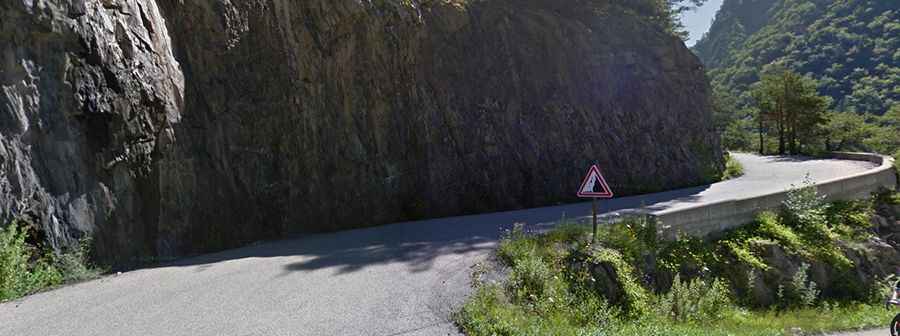
The D221 road leading to the mountain village of Oulles, in the Isère department of the French Alps, is one of the most vertigo-inducing local routes in the Taillefer massif. At an elevation of 1,483m (4,865ft), the village remained isolated from vehicular traffic until 1963. Technically, the road is a feat of mountain engineering, literally clawed into the rockface to provide access to what was once only accessible via mule trails.
| Road facts: D221 to Oulles | |
|---|---|
| Location | Isère, French Alps (France) |
| Length | 6.5 km (4 miles) |
| Average Gradient | 11.8% (Max 13.1%) |
| Elevation Gain | 767 meters |
What makes the D221 road to Oulles technically challenging?
Starting from the D526 junction, the 6.5 km ascent is characterized by an average gradient of 11.8%. Technically, this is an extremely steep climb that places sustained thermal stress on the engine during the ascent and on the braking system during the descent. The road is exceptionally narrow, often barely wide enough for a single vehicle, with very few passing places. The 12 hairpin turns are tight and require precise steering inputs, especially since the road lacks modern safety barriers in several sections where the asphalt borders a direct vertical drop.
How to manage the exposure and cliff-side driving on the D221?
The D221 is a "balcony road" cut directly into the cliffside. Logistically, the primary hazard is the extreme exposure; for most of the 6.5 km, there is no margin for error between the vehicle and the rockface or the precipice. Situational awareness is critical, as rockfalls are a common technical hazard on this type of geology. Despite the road being in good condition and having very little traffic, the narrowness means that meeting an oncoming vehicle requires complex reversing maneuvers to the nearest widening point. Drivers must maintain a low gear to ensure enough torque and control on the 13.1% ramps.
What are the safety protocols for the descent from Oulles?
Descent safety on the D221 road is dominated by the management of the 767-meter vertical drop. Technically, the 11.8% average gradient can lead to brake fade within minutes if the service brakes are used excessively. Drivers must utilize a low-gear engine braking strategy to control the vehicle's speed through the 12 switchbacks. Given that the village of Oulles has only a dozen year-round residents, the road is not prioritized for heavy winter maintenance, making it impassable or extremely hazardous during snow or ice events. Checking weather windows and brake pad thickness is a mandatory protocol before attempting this route.