Driving to Crête de Mourtara: A brutal 15% 4x4 climb in the Cauterets Pyrenees
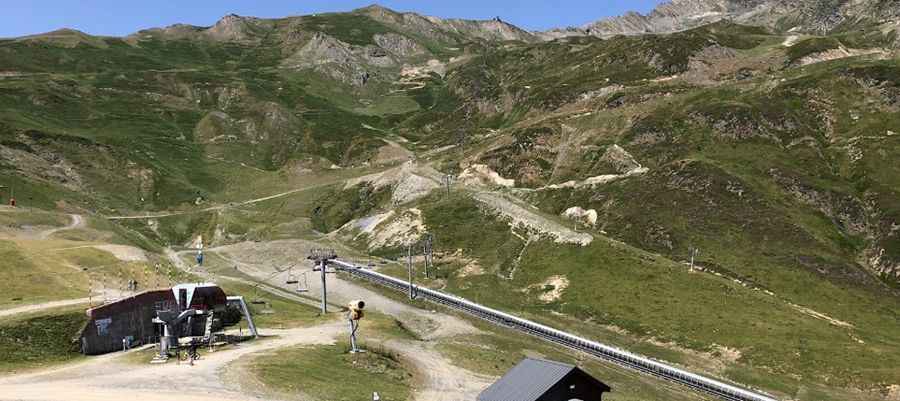
Located in the Hautes-Pyrénées department of south-western France, the track to Crête de Mourtara is an extreme high-altitude challenge in the heart of the Pyrenees National Park. Reaching an elevation of 2,421m (7,942ft) above sea level, this is a raw, unpaved service road used for the maintenance of the Cauterets-Le Lys ski resort. It is a journey of pure verticality, where the combination of loose shale and a staggering incline creates a high-stakes environment for any vehicle.
| Road facts: Crête de Mourtara | |
|---|---|
| Location | Hautes-Pyrénées, France (Occitanie) |
| Elevation | 2,421 m (7,942 ft) |
| Length | 3.7 km (2.29 miles) |
| Elevation Gain | 580 m |
| Average Gradient | 15.67% |
How challenging is the 15.6% climb to Crête de Mourtara?
The ascent to Crête de Mourtara starts from the Station de Ski Cauterets-Le Lys and covers 3.7 km of relentless climbing. With a vertical gain of 580 meters, the average gradient is a brutal 15.67%. The road surface is entirely unpaved, consisting of shifting gravel and loose stones that offer minimal traction. As you gain altitude, the track becomes even steeper and more rocky, with 7 sharp hairpin turns that test your vehicle's steering lock and torque delivery. Maintaining momentum is critical; if your wheels start to spin on the loose scree, the incline is so severe that getting the vehicle moving again is a technical nightmare.
What are the hazards of the Cauterets ski-station tracks?
As a chairlift access trail, the road to Crête de Mourtara was never designed for civilian traffic. The window for driving this route is extremely narrow, usually only possible at the end of August when the Pyrenean snow has finally melted. The primary hazard is the "tippy" nature of the track and the lack of any safety barriers in the high-altitude sectors. The weather in the Pyrenees National Park can flip in minutes, turning the dusty, rocky path into a slick, muddy trap. The vertical drops are unprotected, and the soft, eroding shoulders of the trail mean that any steering error on the narrowest ramps can lead to a terminal situation.
What is the best 4x4 strategy for the high Pyrenees roads?
Reaching the summit of Crête de Mourtara requires a vehicle in peak mechanical condition. The sustained 15% gradient will put massive stress on your drivetrain and cooling system, so monitor your engine temperature gauges closely. You must air down your tires to maximize the footprint on the jagged rocks and shifting shale. On the descent back to Cauterets, do not rely on your foot brakes; the punishing incline will boil your fluid and cause brake fade within minutes. Use heavy engine braking and keep the vehicle in its lowest gear. In this part of the Pyrenees, the mountain dictates the rules—respect the gradient and ensure your braking system is 100% before starting the drop.
Pic: Vincent