How to drive the service road to Pas de Chavanette?
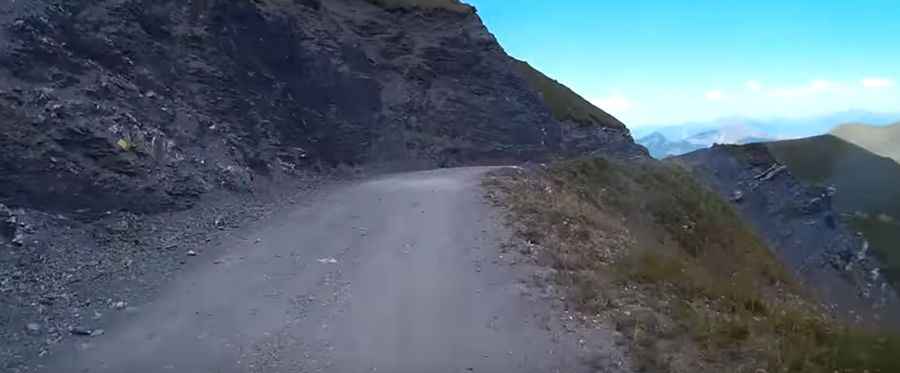
Pas de Chavanette is an international high mountain pass reaching an elevation of 2,147m (7,043ft) above sea level, situated on the border between France and Switzerland. Located directly above the Avoriaz 1800 ski resort, the pass is famous for the "Swiss Wall" ski slope. However, for vehicle transit, it features a technical unpaved service road used primarily for lift maintenance. The 4.6 km track is characterized by steep gradients and a loose, slippery surface that becomes logistically impassable during the winter months.
| Road facts: Pas de Chavanette | |
|---|---|
| Location | France-Switzerland Border (Avoriaz) |
| Elevation | 2,147 m (7,043 ft) |
| Length | 4.6 km (2.8 miles) |
| Average Gradient | 8.71% |
| Surface | Unpaved / Service track |
What are the driving logistics of the Pas de Chavanette service road?
Starting from the Avoriaz resort, the 4.6 km ascent to Pas de Chavanette is a logistical challenge due to the nature of the terrain. As a service road for chairlifts, the track is not engineered for standard traffic. The average gradient of 8.71% is deceptive, as the final two kilometers feature much steeper ramps. Logistically, maintaining a constant torque flow is vital to prevent tires from spinning on the loose shale and gravel. A high-clearance 4x4 vehicle with short gearing is a technical requirement to manage the 401-meter elevation gain without overheating the transmission or compromising traction on the slippery top layer.
How does the surface condition affect traction at Pas de Chavanette?
The road surface to the summit is totally unpaved and notoriously slippery. Technically, the accumulation of fine dust and loose stones on the steeper sections of the Chavanette track reduces the friction coefficient significantly. Drivers must account for "washout" risks on the unbanked curves. Logistically, it is recommended to adjust tire pressures downward to increase the contact patch before attempting the final 2-kilometer push. In wet conditions, the surface turns into a high-slip clay-like consistency, making the climb technically impassable for even the most capable off-road vehicles due to the extreme incline.
What are the seasonal hazards and winter protocols for Pas de Chavanette?
Due to its integration into the Portes du Soleil ski domain, the road to Pas de Chavanette is strictly impassable in winter. The track becomes part of the active ski infrastructure and is buried under several meters of snow. Logistically, the operational window for driving is limited to the summer months (July-September). Even in the summer, sudden alpine thunderstorms can cause rapid surface erosion. Technical preparation must include checking weather windows, as the high-altitude position at 2,147m leaves the vehicle exposed to severe lightning and wind without any logistical shelter along the 4.6 km route.
How to manage engine performance on the Avoriaz to Chavanette climb?
The sustained climb from Avoriaz 1800 to the 2,147m summit puts localized stress on the engine's cooling system. While the altitude is moderate compared to Himalayan passes, the slow-speed, high-load nature of the service track means there is minimal airflow through the radiator. Logistically, drivers should monitor oil and coolant temperatures closely. Technically, the descent back to Avoriaz requires even more discipline; the extreme steepness of the final kilometers necessitates heavy engine braking in first gear (4L) to prevent brake fluid vaporization. Relying on service brakes on this 8.71% average descent will lead to immediate brake fade.
Pic: SteadyMTB