Driving to Col du Piéfroid: A brutal 18% 4x4 climb in the Isère Alps
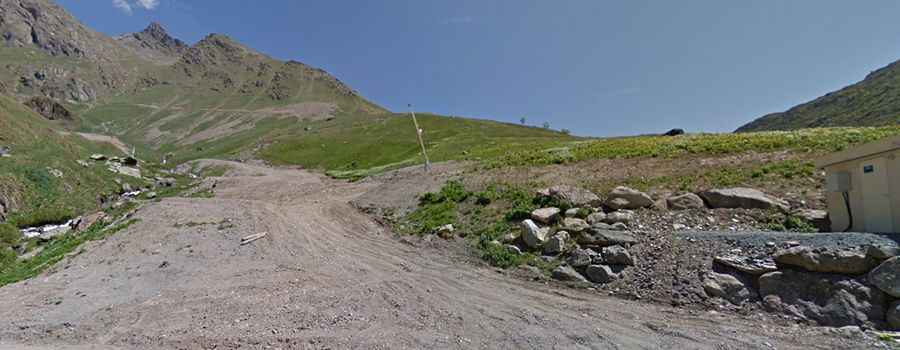
Located in the Isère department of southeastern France, the track to Col du Piéfroid is one of the most extreme high-altitude challenges in the French Alps. Reaching an elevation of 2,937m (9,635ft) above sea level, this is a raw, unpaved service road that serves the chairlift infrastructure of the region. It is a journey of pure verticality, where the thin air and the brutal incline screen out all but the most experienced off-road drivers and expedition-grade vehicles.
| Road facts: Col du Piéfroid | |
|---|---|
| Location | Isère, France (Rhône-Alpes) |
| Elevation | 2,937 m (9,635 ft) |
| Length | 6 km (3.7 miles) |
| Elevation Gain | 1,105 m |
| Average Gradient | 18.41% |
How challenging is the 18% climb to Col du Piéfroid?
The ascent to Col du Piéfroid starts from the already demanding Col de Sarenne. From there, you face a vertical wall: 1,105 meters of elevation gain in just 6 km. This results in a staggering average gradient of 18.41%. The road is entirely unpaved and consists of loose Alpine scree and jagged rocks. Maintaining traction on such a steep, unstable surface is a nightmare; if you lose momentum, your tires will simply spin into the shale. This is a low-range gears only environment, where the mechanical stress on your drivetrain and cooling system is constant due to the lack of airflow at high revs.
What are the high-altitude hazards of the Piéfroid track?
As one of the highest roads in Europe, the environment at Col du Piéfroid is unforgiving. The road is a chairlift access trail, meaning it was never designed for civilian transit. There are no safety barriers, and the track is often "tippy," with lateral inclines that threaten to slide your vehicle off the ridge. During the winter, the pass is completely buried and impassable. Even in summer, the weather can flip in minutes; a sudden storm turns the loose dust into a slick slurry, making the 18% ramps a death trap for anything but a dedicated 4x4 vehicle with professional-grade tires.
What is the best 4x4 strategy for the highest roads of France?
Success on the Col du Piéfroid requires more than just a powerful engine. You must air down your tires to maximize the footprint on the loose stones. The thin air at nearly 3,000 meters significantly reduces engine torque, so you'll need to manage your power delivery carefully to avoid stalling on the steepest hairpins. Descending is equally dangerous; you cannot rely on your foot brakes on an 18% drop of this length without boiling your fluid. Heavy engine braking is the only way to stay in control. It is officially one of the highest mountain passes of France, and it demands the same respect as a high-altitude expedition.