Driving the D231 to Lac de Bious-Artigues: A narrow Pyrenean balcony road
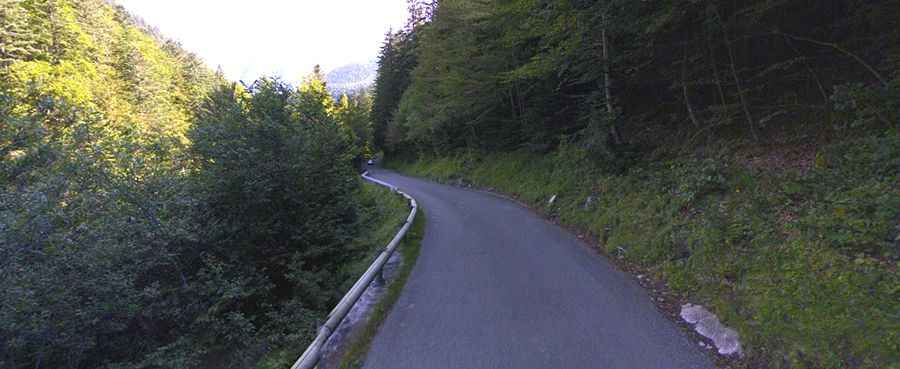
Located in the heart of the Ossau Valley, within the Pyrenees National Park, the D231 road to Lac de Bious-Artigues is a high-consequence mountain drive in the Pyrénées-Atlantiques department. Reaching an elevation of 1,416m (4,646ft) above sea level, this paved route is the only motorized access to one of the most iconic glacial lakes in the Nouvelle-Aquitaine region. It is a journey defined by extreme narrowness and vertical rock faces that dictate exactly what type of vehicle can successfully reach the summit.
| Road facts: Lac de Bious-Artigues (D231) | |
|---|---|
| Location | Pyrénées-Atlantiques, France (Ossau Valley) |
| Elevation | 1,416 m (4,646 ft) |
| Length | 4 km (from Gabas) |
| Average Gradient | 9.47% |
| Access | Restricted for heavy vehicles (Véhicules lourds) |
Why is the road to Lac de Bious-Artigues restricted for heavy vehicles?
The entrance to the D231 near Gabas is marked with a definitive "Route étroite et dangereuse" sign, explicitly advising against the use of heavy vehicles (véhicules lourds). This warning is critical for logistics: the road is a classic balcony drive where the limestone cliff hangs directly over the asphalt. While a standard car might pass under the overhangs, the high roof of a modern van, RV, or motorhome will catch the jagged rock face before the tires even reach the edge of the lane. Furthermore, the 4 km ascent features a punishing 9.47% average gradient, which puts immense strain on the cooling systems of larger vehicles during the summer months.
What are the primary hazards of the D231 in the Ossau Valley?
The drive to Lac de Bious-Artigues is essentially a single-track road with very limited passing pockets. Encounters with oncoming traffic require one driver to reverse on steep, narrow ramps with unprotected drops. The asphalt follows the natural contour of the mountain, creating several blind meanders where the lack of visibility makes every turn a potential hazard. Beyond the rock overhangs, the road surface is prone to debris from the cliffs above, and after heavy Pyrenean rains, the runoff can make the 9% ramps surprisingly slick. Even with a large parking lot of 100 places at the summit, the physical limitations of the road mean that access is often managed or restricted during peak season to avoid total logistical gridlock.
What is the best driving strategy for the Bious-Artigues ascent?
Navigating the D231 requires a slow, rhythmic approach. You must scan the road far ahead for "passing pockets" and be prepared to yield to vehicles climbing up, as the 9.47% incline makes restarting on a steep slope difficult for many cars. If you are driving a wider vehicle, mirror management is vital to avoid clipping the rock face on your right. On the descent back toward the D934, do not ride your brakes; the continuous steep gradient will lead to rapid brake fade. Use heavy engine braking and maintain a controlled pace. In the Pyrenees National Park, the "narrow and dangerous" sign is a reality—respect the vertical scale of the Ossau Valley and never attempt this route in a high-profile vehicle.