Col de la Loge: Driving the narrow and degraded road in Drôme
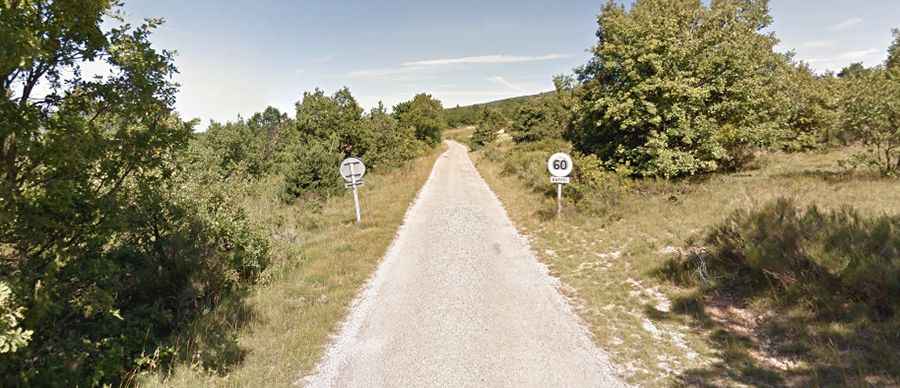
Col de la Loge is a mountain pass at an elevation of 1,002 meters (3,287 ft) above sea level, located in the Drôme department of southeastern France. The route is a short but technical link starting from Ferrassières. Defined by its narrow dimensions and a severely degraded surface, the road serves as a secondary mountain pass and a service track for local agricultural machinery, requiring constant attention to tire grip and vehicle width.
| Road facts: Col de la Loge | |
|---|---|
| Location | Drôme, Auvergne-Rhône-Alpes, France |
| Elevation | 1,002 m (3,287 ft) |
| Length | 2.2 km (1.36 miles) from Ferrassières |
| Surface | Broken asphalt / Agricultural mud |
How steep is the climb from Ferrassières?
The 2.2-kilometer journey from Ferrassières is a steep ascent that gains elevation rapidly. Although the road is technically asphalted, the pavement is broken at the edges and full of potholes. The track is so narrow that vegetation from the mountain walls often touches the sides of the vehicle. To clear the steepest ramps, you need steady torque; any sudden acceleration on the degraded surface can cause the wheels to spin, especially where the asphalt is covered in loose gravel.
What are the hazards of the Route du Col de la Loge?
The primary hazard is the "greasy" layer of mud and organic debris left on the road by heavy tractors. This layer significantly reduces friction, increasing braking distances on the descent. There are no safety barriers, and the drop-offs are often hidden by tall grass or thick shrubs. Encountering oncoming agricultural traffic is the main logistical problem; because the road is barely wide enough for one car, you must be prepared to reverse to the nearest farm entrance or a wider dirt shoulder to let them pass.
Is the road to Col de la Loge open in winter?
The road remains open year-round, but it is not a priority for snow removal. At 1,002 meters, the pass frequently experiences black ice, which is difficult to detect under the layer of agricultural grime. During the autumn harvest, the amount of mud on the road makes the 2.2 km climb extremely slick, requiring high concentration to avoid sliding into the drainage ditches. A simple rainstorm can turn the broken asphalt into a muddy trap, making steering heavy and unpredictable.
What mechanical prep is needed for Col de la Loge?
Before driving this route, check your suspension bushings and steering rack. The constant impact of the broken road surface and deep ruts will punish any worn components. Your tires must have sufficient tread depth to channel away the mud and water. It is also essential to verify your windshield washer fluid and wipers; the tractors and machinery ahead often kick up a thick slurry of dirt that can blind you in seconds. Ensure your handbrake is fully functional for starts on the steep, slippery inclines.
Why is the surface of Col de la Loge so poor?
The road is primarily used for local rural logistics rather than through-traffic. The heavy weight of farm trailers has crushed the edges of the thin asphalt layer over decades, creating a "dome" effect in the center of the road. This forces the driver to stay in the middle of the track, only moving to the side when absolutely necessary. This lack of maintenance makes it a high-vibration journey where the physical reality of the terrain is felt through every mechanical part of the car.