Col du Liorin: Driving the narrow paved climb in the Vercors Massif
Col du Liorin is a mountain pass at an elevation of 1,226 meters (4,022 ft) above sea level, located in the Isère department, in the Auvergne-Rhône-Alpes region of France. Situated within the Vercors Massif, the pass is crossed by a narrow paved forest road.
| Road facts: Col du Liorin | |
|---|---|
| Location | Isère, Auvergne-Rhône-Alpes (France) |
| Elevation | 1,226 m (4,022 ft) |
| Length | 4.2 km (2.6 miles) |
| Surface | Paved (Narrow and weathered) |
Where is Col du Liorin?
The pass is located in the southeastern part of France, south of the Gorges de la Bourne. The road runs through dense pine forests and high pastures within the Vercors Regional Natural Park.
Is Col du Liorin paved?
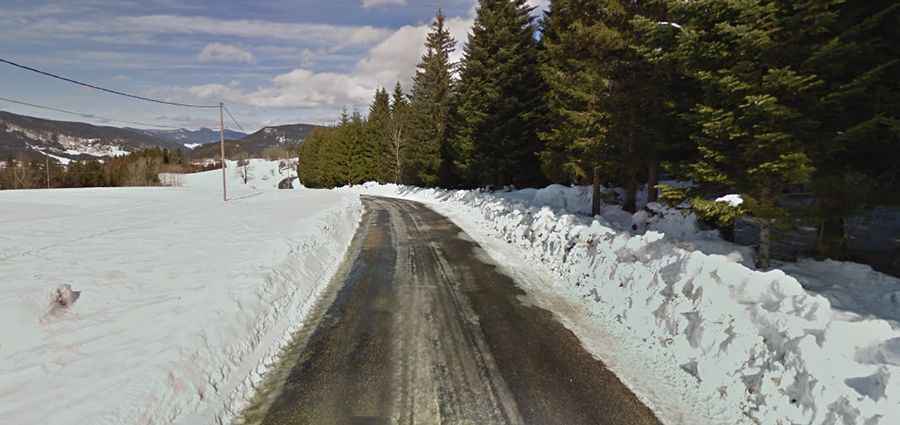
Yes, the road over Col du Liorin is entirely paved, but the asphalt is narrow, weathered, and lacks guardrails along much of its length. Damp shade under the trees often keeps the pavement wet, with pine needles and forest debris reducing tire grip. Due to the single-lane width, meeting an oncoming vehicle requires pulling onto the grassy shoulder or reversing to a wider spot.
How long is the road through Col du Liorin?
The road spans 4.2 kilometers (2.6 miles), running south to north from the village of Corrençon-en-Vercors to its junction with the D215C road. The climb rises steadily through the forest. In winter, snow accumulation and lingering ice patches make winter tires or chains necessary to traverse the pass.