Is the road to Col de Carabès in the French Alps difficult to drive?
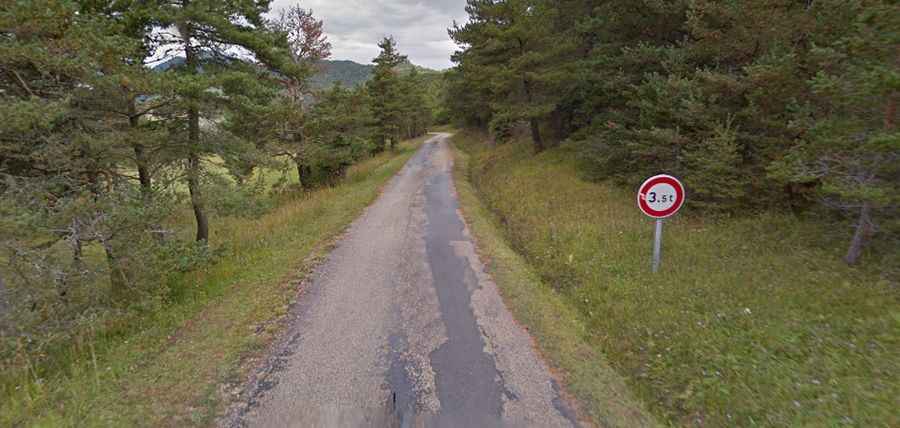
Reaching the Col de Carabès is like stepping back in time to the old, forgotten roads of the French Alps. At 1,261m (4,137ft) above sea level, this pass sits on the boundary between the Hautes-Alpes and the Drôme departments. It’s not a major mountain crossing, but a narrow, winding asphalt ribbon that feels more like a private driveway through the forest than a public road. If you don't like tight spaces and steep drops, this route will test your nerves.
| Road facts: Col de Carabès | |
|---|---|
| Location | Hautes-Alpes / Drôme (France) |
| Elevation | 1,261m (4,137ft) |
| Road Name | D106 / D27 |
| Avg. Gradient | 6.3% |
| Surface | Asphalted (Narrow / Bumpy) |
How long is the road to Col de Carabès?
The road through the pass is 9.5 km long, connecting the small villages of La Bâtie-des-Fonds to the north and La Piarre to the south. The southern ascent from La Piarre is the most intense part, covering 6.99 km with a total elevation gain of 441 meters. The average gradient is 6.3%, but the numbers don't tell the whole story. The road is constantly twisting through dense pine forests, and the lack of a center line means you have to stay sharp. It’s a slow climb where you’ll spend more time in second gear than in third.
Is the road to Col de Carabès paved?
Yes, the road is fully asphalted, but don't expect a smooth highway. The surface is old, bumpy, and narrow. In many sections, the road is barely wide enough for two small cars to pass each other. As you can see from the local signages, there is a strict 3.5-ton weight limit, meaning heavy trucks and large campervans are banned. If you meet another vehicle in one of the tighter bends, someone is going to have to back up to a "crossing point."
What are the hazards when driving to Col de Carabès?
The main danger on the D106 is the lack of visibility and the tight dimensions. Because the road is so narrow, local drivers often hug the middle of the asphalt, and encountering a cyclist or a tractor around a blind corner is a real possibility. During the winter months, the pass is often covered in ice and snow, and since it’s a secondary route, it is not always a priority for the plow crews. Autumn is also tricky; the road becomes a slippery trap of wet pine needles and fallen leaves that can make your tires spin even on the paved surface.
Is the drive to Col de Carabès worth it?
For those who love the "empty" Alps, away from the tourist crowds of the big passes, Carabès is a hidden gem. It offers a sense of total isolation. At the summit, the forest clears just enough to give you a glimpse of the jagged limestone peaks of the Drôme. There are no cafes, no gas stations, and very few houses. It’s just you, your engine, and the mountain. If you decide to drive this route, make sure your brakes are in good shape for the descent and keep your speed down. In these Alps, the road belongs to whoever is more patient.
Driving through the border of Hautes-Alpes and Drôme is an exercise in focus. The road to Col de Carabès is a reminder that you don't need 2,000 meters of elevation to find a challenging drive. Respect the narrow lanes, watch for oncoming traffic in the bends, and focus on the road. The French mountains always have a way of humbling drivers who think they’ve seen it all. Stay sharp.