Tête de Veret: Driving the Inhuman Unpaved 21% Ramps of the Grand Massif
Tête de Veret is a high mountain peak at an elevation of 2.309 m (7,575 ft) above sea level, located in the Haute-Savoie department of the Rhône-Alpes region, in southeastern France.
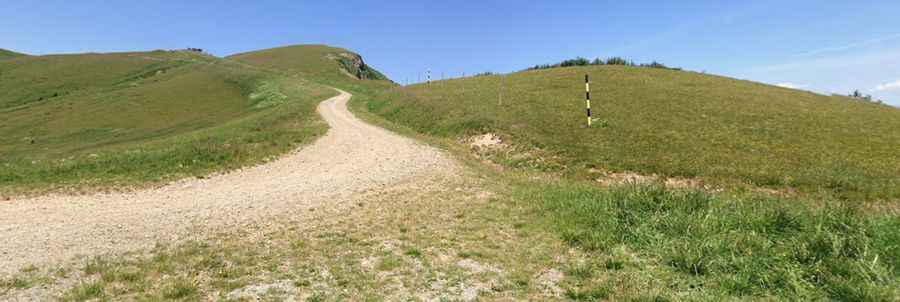
Is the road to Tête de Veret unpaved?
This area is home to the renowned Flaine ski resort, famous for its Bauhaus-inspired concrete architecture and monumental sculptures, including works by Pablo Picasso. Hidden above the resort, however, is a formidable network of completely unpaved service roads dedicated to maintaining the ski station’s lifts and summit facilities. The main access track leading to Tête de Veret is a challenging drive that is 5.7 km (3.54 miles) long and is strictly closed to private vehicles unless permitted.
How steep is the road to Tête de Veret?
The route is extremely steep, rocky, and demands high ground clearance and four-wheel drive. While the average gradient is challenging, the trail features multiple ramps reaching a brutal 21% maximum gradient. This is a highly technical and exposed drive that is not for timid drivers, with high winds blowing here all year long.
The High Points of the Track
This single 4x4 service track acts as the backbone connecting several major high points in the Grand Massif area:
- Tête de Veret (2,309 m / 7,575 ft): The highest point of the network, offering extreme exposure and 360-degree views over the cliffs.
- Col des Grands Vans (2,198 m / 7,211 ft): A challenging section of the track that is notoriously loose and prone to rockfall.
- Tête du Pré des Saix (2,107 m / 6,912 ft): A key vantage point with significant exposure on narrow sections.
- Col de Vernant (1,967 m / 6,453 ft): One of the lower, but still demanding, cols on the initial approach to the higher peaks.
When Can I Drive to Tête de Veret?
The road is usually impassable and closed from October to June (weather permitting) due to heavy snowfall and ice. Even during the short summer season, the zone is prone to heavy mist, making low visibility conditions extremely dangerous.
Pic: thomas nicodeme