How to drive the narrow road to Col des Veaux?
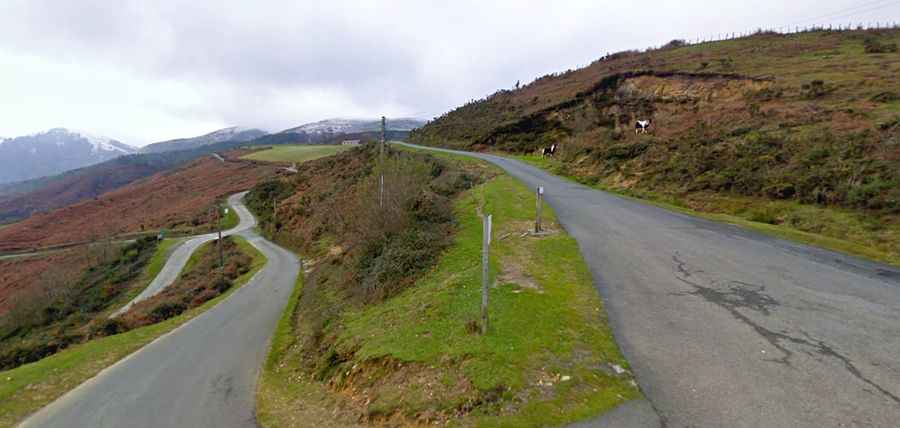
The Col des Veaux is an international mountain pass at an elevation of 540m (1,771ft) above sea level, located on the border between France (Pyrénées-Atlantiques) and Spain (Navarre). The road spans 19.9 km, linking Louhossoa in the north with Amaiur-Maya in the Baztan valley to the south. Although the surface is fully paved, the route is pretty challenging due to its extreme narrowness and steep gradients that characterize the western Pyrenees.
| Road facts: Col des Veaux | |
|---|---|
| Location | France (Louhossoa) - Spain (Amaiur-Maya) |
| Elevation | 540m (1,771ft) |
| Length | 19.9 km |
| Surface | Asphalt (Extremely Narrow) |
| Max Gradient | Sustained steep sections |
How challenging is the road to Col des Veaux border road?
The road is pretty narrow. In many sectors, the paved surface is only wide enough for a single vehicle, requiring drivers to use unpaved shoulders or specific passing pockets when encountering oncoming traffic. The gradients are steep and sustained, putting a constant load on the engine during the 19.9 km drive. The layout features numerous blind corners and tight hairpins where visibility is obstructed by the local topography and vegetation.
How dangerous is the road to Col des Veaux in winters?
During the autumn and winter months, the road can become hazardous due to heavy fog and black ice, even at its relatively low elevation of 540 meters. It is a technical requirement to verify that your vehicle's cooling and braking systems are in optimal condition before entering the pass from either the French or Spanish side.
Is the road to Col des Veaux paved?
The asphalt surface on the Col des Veaux is generally intact, but the edges are often eroded or soft, making it dangerous to drop a wheel off the pavement. Heavy rain in the Pyrénées-Atlantiques can lead to localized debris on the road, such as rocks or fallen branches. High-profile vehicles or those with trailers are not recommended for this route due to the tight radius of the switchbacks and the lack of space to maneuver.