Driving the Ski Service Tracks of Montgenèvre: Chalvet, Alpet & Serre Thibaud
In the mountains surrounding Montgenèvre, on the border between France and Italy, several high-altitude tracks climb above 2,400 meters elevation. Built to construct and service the local ski resort infrastructure, these three unpaved service routes—Le Chalvet, Col de l'Alpet, and Crête de la Serre Thibaud—scale steep slopes, running along narrow ridges above the Cottian Alps.
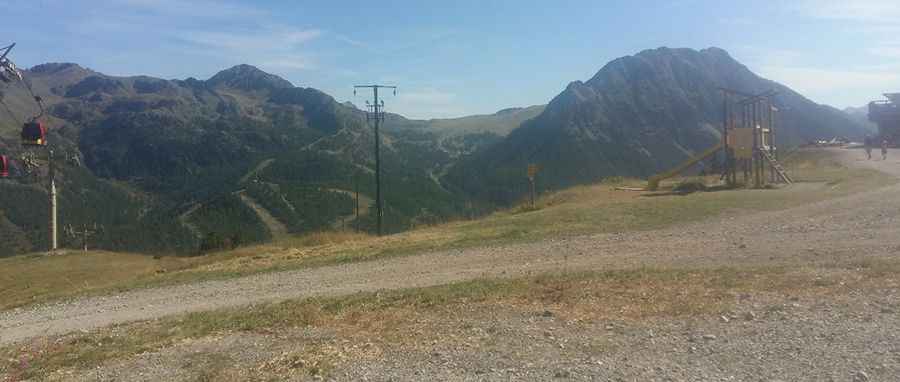
Note: These tracks are private ski resort service roads. Public motorized access is restricted, and driving is limited to authorized maintenance vehicles, emergency services, and resort staff.
What are the main high-altitude service tracks in Montgenèvre?
Three main service routes reach high ski lift stations and ridge points directly above the village of Montgenèvre:
Le Chalvet (2,583 m / 8,474 ft): Reaching the highest elevation of the three, this track climbs the northern slopes above Montgenèvre toward the upper chairlift station. The route features continuous steep climbs over loose alpine stones, with switchbacks cutting across open ski runs.
Crête de la Serre Thibaud (2,517 m / 8,257 ft): Climbing the ridge southeast of the pass, this track follows an exposed mountain crest. The road surface consists of coarse gravel, native rock, and loose dirt, with sharp ramps where 4x4 low-range gearing is required to maintain traction without spinning wheels.
Col de l'Alpet (2,447 m / 8,028 ft): Situated on the southern sector of the resort, this track connects the main valley with the high chairlift terminals near the ridge. The route includes steep, unpaved ramps and tight switchbacks on a surface prone to rain erosion and deep ruts.
What are the surface and driving conditions on these ski tracks?
All three routes are strictly unpaved 4x4 tracks made of native soil, broken limestone, and loose mountain scree. The inclines are steep and continuous, featuring tight hairpin turns along narrow ledges without safety barriers. High ground clearance and low-range four-wheel drive are necessary to negotiate the rocky steps and maintain momentum on the loose surface.
When are these high-altitude tracks accessible?
Due to their high elevation between 2,440 and 2,580 meters, these tracks are buried under deep snow for most of the year. During winter and spring, they are integrated directly into the ski slopes. The snow melts late in the season, leaving only a short window in mid-to-late summer (typically July through September) when the tracks are dry enough for maintenance vehicles to access the upper summits.
Pic: Paolo Ottonello