Driving the Monte-Carlo Rally: The most legendary mountain passes
The Rallye Monte-Carlo is the ultimate test of mechanical focus and tire management. Unlike other events, the "Monte" is defined by its unpredictable verticality, where drivers can face dry asphalt, deep snow, and black ice in a single 30 km stage. The heart of this race lies in the mountain passes of the Alpes-Maritimes and the Hautes-Alpes, a network of narrow, high-consequence roads that have become the proving grounds for the world's most elite drivers.
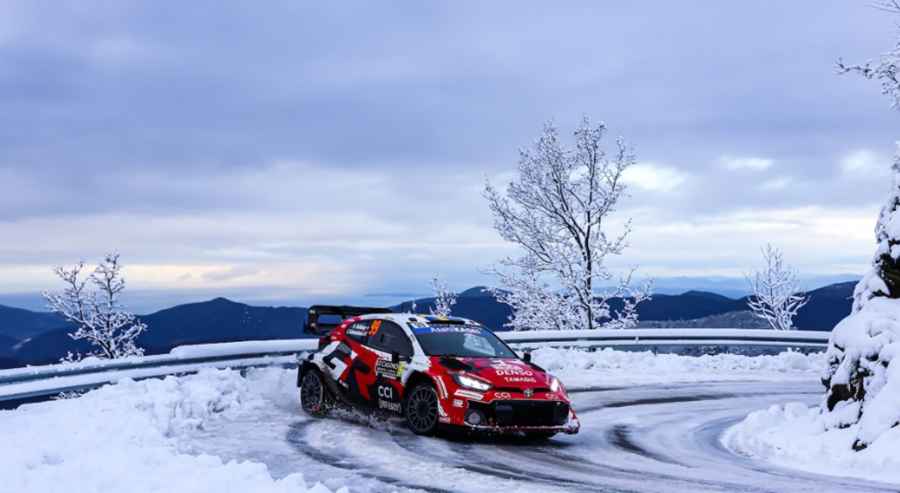
Why is the Col de Turini the king of the Monte-Carlo Rally?
The Col de Turini (1,607m) is the most iconic stage in rally history. Famous for the "Night of the Turini," this pass connects La Bollène-Vésubie with Sospel through a dizzying sequence of stacked hairpins. The technical challenge here is the lack of consistency; while the climb might be clear, the summit often hides thick patches of ice and snow. Driving this route at night requires perfect braking precision, as the stone walls and steep drops leave zero margin for error. It is a road where the brakes often glow cherry-red under the relentless load of the descent.
What makes the Col de Braus hairpins a technical gauntlet?
Located between L'Escarène and Sospel, the Col de Braus (1,002m) is a masterclass in tight-angle steering. This pass is world-renowned for its "hairpin stacks"—sharp turns piled on top of each other with almost no straight sections in between. For a driver, the Col de Braus is a constant battle with the steering rack and the handbrake. Managing the weight transfer of the vehicle through these 180-degree turns is critical; if you lose momentum or miscalculate the grip on the worn, polished asphalt, you'll stall the engine or drop a wheel into the unforgiving drainage ditches.
How does the Col de la Madone test vehicle clearance and width?
The Col de la Madone is one of the most claustrophobic balcony roads in the Alpes-Maritimes. Clinging to the cliffs above Menton, this route is so narrow that it barely accommodates a single rally car, let alone two-way traffic. It is a high-consequence drive where the rock face hangs over the asphalt, demanding constant attention to vehicle clearance. The road surface is often degraded and covered in loose gravel, making lateral stability a constant concern. In the Monte-Carlo, the Madone is where suspension setups are truly tested against the broken, uneven tarmac of the French Riviera’s hinterland.
What are the hidden dangers of the Col d'Espreaux?
Moving north toward the Hautes-Alpes, the Col d'Espreaux (1,160m) offers a different kind of threat. While the road is wider and faster than the coastal passes, it is notorious for its "black ice" traps. The dense forest cover prevents the sun from reaching the asphalt, meaning that even on a clear day, the shaded hairpins can be as slick as a skating rink. It is a high-speed logistical puzzle where picking the right tire compound can make the difference between a successful transit and a terminal slide into the ravine. This pass demands a driver's "feel" for the road, sensing the change in traction before the car begins to rotate.
How to manage the logistics of driving Alpine rally passes?
Navigating these legendary passes requires a vehicle in peak mechanical condition. The steep gradients and constant hairpins of the Alpes-Maritimes will boil your brake fluid and stress your cooling system within minutes. Heavy engine braking is mandatory on every descent to preserve your pads. Self-sufficiency is key; these roads are isolated, and mobile signal is often non-existent in the deep gorges. Whether you are driving the technical ramps of the Col de la Porte or the exposed ridges of the Turini, remember the golden rule of the Monte-Carlo: respect the asphalt, watch the shadows for ice, and never underestimate the vertical power of the French Alps.
Image source: https://acm.mc/en/the-results-of-a-hellish-94th-edition/