How to get to Cime de Sistron in the Alps?
Cime de Sistron is a high mountain peak at an elevation of 2,605m (8,546ft) above sea level, located in the Alpes-Maritimes department of France. Situated near the Italian border in the Provence-Alpes-Côte d'Azur region, the summit is accessed via a technical unpaved service road. Operating a vehicle on this track requires high-clearance 4x4 capabilities due to the extreme gradients and the fragile high-altitude environment of the Parc national du Mercantour.
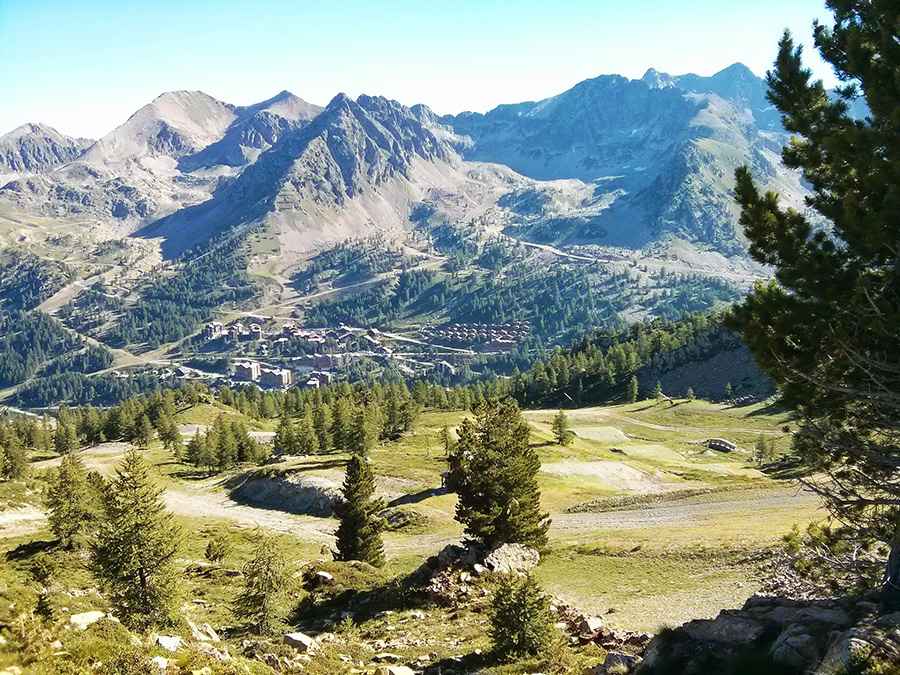
| Road facts: Cime de Sistron (Alpes-Maritimes) | |
|---|---|
| Location | Isola 2000, Alpes-Maritimes (France) |
| Elevation | 2,605 m (8,546 ft) |
| Length | 5 km (3.1 miles) from Isola 2000 |
| Average Gradient | 13.24% |
| Surface | Unpaved (Service track for chairlifts) |
What is the technical difficulty of the Cime de Sistron ascent?
Starting from the ski resort of Isola 2000, the drive to the summit covers 5 km with a massive elevation gain of 662 meters. Technically, this results in a brutal average gradient of 13.24%. The track is a native-surface service road designed for chairlift maintenance, featuring steep ramps and loose rocky sectors that test the vehicle's traction limits. Driving this route requires a constant 4x4 engagement and a high-torque engine to manage the sustained verticality without overheating in the thin alpine air at 2,605m.
How to manage logistics in the Parc national du Mercantour?
Logistically, Cime de Sistron is subject to strict environmental regulations due to its location within the Mercantour National Park. Drivers must remain strictly on the established unpaved roadbed to avoid soil erosion and permafrost degradation. Technically, the road is totally impassable from late autumn to early summer due to heavy snow accumulation. Safety protocols mandate a thorough check of the weather window, as sudden thermal shifts can turn the 13.24% unpaved slopes into high-risk slippery terrain where vehicle recovery is logistically complex.
Mechanical requirements for the Isola 2000 descent
The 5 km descent back to Isola 2000 is a critical test for the vehicle's braking integrity. Descending 662 meters over such a short distance requires the exclusive use of low-range gearing and engine braking. Relying on the service brakes on a 13.24% average slope will lead to rapid thermal failure. Before starting the drive, ensure that tire pressures are adjusted for rocky terrain to prevent sidewall punctures on the sharp granitic debris. The summit offers a 360-degree panorama of the massifs, but the driver’s technical focus must remain on managing the vehicle's center of gravity during the steepest switchbacks of the Sistron track.
Pic: Bruno Durand