Crêt de l'Oeillon: Driving the Steep D63.1 Road in the Pilat Massif
Crêt de l'Oeillon is a mountain peak at an elevation of 1,364 meters (4,475 ft) above sea level, located in the Pilat Massif, within the Loire department of the Auvergne-Rhône-Alpes region, France. The D63.1 road branches off the main ridge route to reach the summit, where a prominent 80-meter-high television broadcasting antenna stands at the crest.
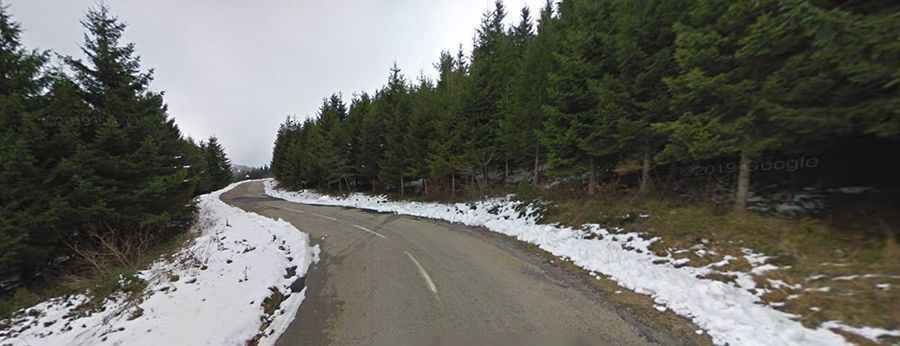
| Road facts: Crêt de l'Oeillon | |
|---|---|
| Location | Loire, Massif Central, France |
| Elevation | 1,364 m (4,475 ft) |
| Road Name | D63.1 |
| Length | 1.4 km (0.87 miles) from D63 junction |
| Average Gradient | 9.07% |
| Surface | Paved / Narrow asphalt with gravel shoulders |
How long is the road to the summit of Crêt de l'Oeillon?
The final spur road to the summit starts at the intersection with the D63 and covers a short distance of 1.4 km (0.87 miles). This single lane climbs 127 vertical meters directly up the grassy flank of the mountain, resulting in a sustained average gradient of 9.07%. The roadbed is fully paved but exceptionally narrow, measuring less than 3.5 meters across. It lacks a painted centerline or structural guardrails, forcing tires onto the unpaved grass margins when crossing oncoming vehicles or trucks.
What are the road conditions on the D63.1?
The asphalt surface on the D63.1 is standard, but the track is exposed to the rapid atmospheric changes of the Rhône Valley. Due to the lack of lateral tree lines on the final section, strong winds carry loose stones and grit from the scree slopes onto the lanes, reducing tire traction on the tight corners. During autumn and early spring, thick low cloud layers settle directly on the asphalt, dropping driving visibility down to less than five meters inside the sharp, unlit curves near the upper transmitter platform.
What should you expect at the summit of Crêt de l'Oeillon?
The road ends in a small, dead-end asphalt parking lot directly underneath the 80-meter-high steel television tower structure. Space for maneuvering is highly restricted, leaving barely enough room for vans or motorhomes to turn around without reversing onto the steep margins. The summit plateau is fully exposed to violent lateral wind gusts coming from the west, which slam against high-sided vehicles. The shift from the protected forest lines of the lower D63 to the bare crest exposes cars to sudden stability changes.
Is the drive to Crêt de l'Oeillon dangerous in winter?
The 1.4 km track becomes a severe hazard from November to late March due to heavy snowfall and zero winter maintenance. The road is not plowed or salted regularly for public transit, allowing snowdrifts to pack several meters deep across the 9.07% ramps. Severe sub-zero temperatures turn the humidity rising from the Rhône basin into smooth sheets of black ice that hide in the shaded corners, causing front-wheel-drive cars to lose traction instantly and slide backward into the side drainage ruts.