The UK's Most Crash-Prone Scenic Roads Ranked
Some of the most beautiful drives in Britain are also the most dangerous. The roads that snake through moorland, cut across mountain passes or wind along dramatic coastlines tend to attract drivers precisely because they're challenging. And that challenge comes at a cost.
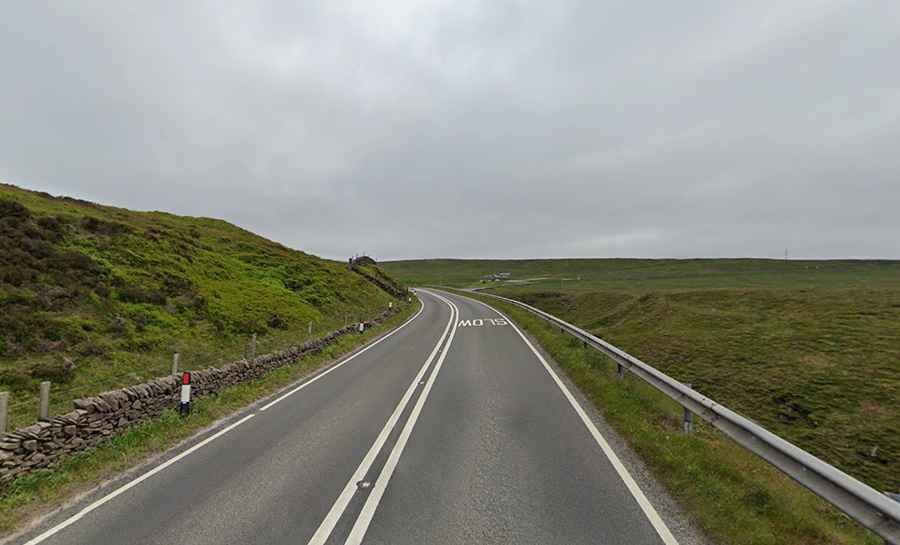
DfT STATS19 data, compiled from police-reported collision records across Great Britain, consistently flags the same routes year after year. Below, we cover everything you need to know about which scenic roads carry the highest accident rates and why.
A285 – Petworth to Chichester, West Sussex
The A285 regularly appears at the top of collision-rate rankings, and it's easy to see why once you've driven it. The road draws you in with fast, open straights before throwing up hidden bends and sudden dips that give very little warning. Drivers unfamiliar with the route will often carry too much speed into corners they can't see clearly.
It's a popular road for motorcyclists, and the combination of tight turns and surface changes makes it particularly unforgiving for two-wheelers.
A537 – The Cat and Fiddle Road, Cheshire to Derbyshire
Stretching just about 10 miles between Buxton and Macclesfield, the A537 punches well above its weight when it comes to accident figures. Its steep gradients and tight bends draw motorcyclists from across the region, but the road's reputation for serious collisions eventually led to a 50mph speed limit being introduced.
Despite the speed reduction, collision rates have remained stubbornly high. In winter, ice forms quickly at altitude and drainage can be poor, which turns an already demanding stretch into something genuinely treacherous.
A57 – Snake Pass, Derbyshire to South Yorkshire
The Snake Pass cuts across the Pennines at an elevation of 1,680 feet, engineered by Thomas Telford back in 1821. It's a dramatic drive in good weather, but it's often the first road in England to close when snow arrives. The bends are tight, the drops are significant and the surface deteriorates quickly in harsh conditions.
Accidents Can Happen to Anyone
If you've had a collision on a remote route like this and it wasn't your fault, it's worth knowing what your options are. Innocent Driver exists specifically to help non-fault drivers manage claims without going through their own insurer, which protects your no-claims bonus and avoids excess costs.
So, before you call your insurer, explore your options and see how you can make the most of a terrible situation.
A592 – Kirkstone Pass, Cumbria
The Kirkstone Pass connects Ambleside with Patterdale in the Lake District via the A592 and is the highest pass in the region open to motor traffic, reaching 1,489 feet above sea level. The gradients are serious, the bends are sharp and the surface can stay wet for long stretches after rain, which is frequent in Cumbria.
Accidents here can be difficult to reach quickly. Mountain rescue teams have been called out to collision sites on this road, particularly in adverse weather when the usual emergency response takes longer to arrive.
A38 – Devon and Cornwall
The A38 has one of the worst safety records of any A road in England, with DfT data consistently flagging the Devon and Cornwall stretches as high-harm routes year after year.
While the Devon Expressway section is a dual carriageway built in the 1970s to handle high volumes, the road transitions to far less forgiving single-carriageway stretches in Cornwall that were never designed for the lorries and caravans now using them.
Steep hills, merging lanes and blind crests are common along this stretch. Add in flooding risk at certain points and the seasonal surge of holiday traffic, and you've got a road that demands constant attention.
A496 – Snowdonia, North Wales
Running between Blaenau Ffestiniog and Llanelltyd through Snowdonia, the A496 combines dramatic scenery with some genuinely awkward road geometry. The terrain is unforgiving and the road frequently narrows without much warning. Rain and low cloud are a near-constant factor, reducing visibility significantly on certain stretches.
It sees numerous accidents every year, many of which involve drivers who underestimate how quickly conditions can change in the mountains.
Concluding Notes
Scenic roads are worth driving. The routes above are some of the most memorable in Britain, and most journeys on them will pass without incident. But they do demand more from you than a dual carriageway, and the data shows what happens when drivers don't give them the respect they need.
If you do find yourself involved in a collision on any road, understanding your rights early can save a lot of time and money later on, particularly if you weren't at fault.