What are the most spectacular roads in England?
Located on the island of Great Britain, in the northern part of Europe, England is a country that shares borders with Scotland and Wales and covers an area of 130,279 square kilometers.
The roads in the country offer a bit of everything, with coastal drives, mountain roads and very steep streets. When travelling to England, you can’t miss Snake Pass, one of the best drives in the UK. At 512m (1,679ft) above sea level, the pass connects Manchester and Sheffield in Northern England and provides a challenging drive across the Pennines. For those preferring the most difficult challenges, don’t miss Hardknott Pass, one of the steepest roads in England, with a gradient of 1 in 3 (about 33%) or Porlock Hill, the steepest A road in England.
If you prefer different experiences, the country hosts the Stocksbridge Bypass. Featuring numerous reports of paranormal activity, it’s one of the Top Haunted Roads in the world. Or the stunning Swindon's Magic Roundabout, an insane 6-circle traffic junction within the Borough of Swindon. It has five smaller roundabouts directing traffic clockwise while cars travel counterclockwise around the inner circle. It's one of the world's 10 best roundabouts.

A nightmare road to Lockyers Hill
Located in the Borough of Gravesham in Kent, Lockyers Hill is one of the steepest and toughest roads of England.

Weekend Getaways: 3 High-Intensity Driving Routes in England
While many seek out long weekends for spa retreats or holiday parks, the true driving enthusiast looks for a different kind of recharge. England’s diverse topography offers several world-class routes that can be explored in just two or three days. These getaways prioritize technical challenges, elevation shifts, and breathtaking geography over traditional relaxation.

Tread Depth vs. Stopping Distance: Why the 1.6mm Legal Limit Isn't Enough
While the UK legal limit for tire tread depth is 1.6mm, waiting until your tires reach this threshold can be a critical mistake. Research into vehicle ballistics and road friction suggests that the degradation of stopping power isn't linear; it accelerates dramatically long before you reach the legal minimum. On high-consequence roads, understanding the "performance cliff" of a wearing tire is essential for survival.
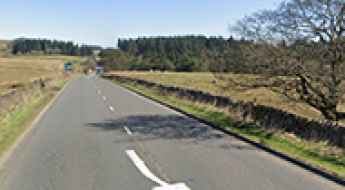
A666 is The Devil's Road in England
Road A666 is located in Greater Manchester and Lancashire, England. Due to its numeric designation, accidents, and other phenomena, the road has been nicknamed The Devil's Highway and The Devil's Road.

Analyzing Driving Test Pass Rates and Road Hazards in the UK
The geography of a city dictates the difficulty of its driving environment. While national pass rates in the UK hover around 47%, the disparity between different urban centers reveals the technical challenges posed by local road architecture. For a driver, a "low pass rate" area is often synonymous with complex multi-lane gyratories, high-density traffic, and outdated 1960s road engineering.
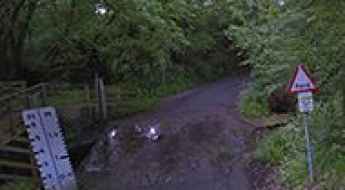
Heightington Road will take your breath away with 19% ramps
Heightington Road is the name of a very challenging drive located in the Wyre Forest District in Worcestershire, England. The road is very steep, with 19% gradients. It is a scary road in the winter with no passing places.

7 Critical Factors for Navigating Rural England
The English countryside offers some of the most technical and rewarding driving environments in Europe. However, the transition from urban motorways to rural B-roads requires a shift in logistical planning. From unpredictable micro-climates to the unique etiquette of single-track lanes, these seven factors are essential for any driver planning an expedition into England’s more remote regions.

Extreme Readiness: Preparing Your Vehicle for High Roads
Driving on dangerous roads—whether a technical mountain pass, a high-volume motorway, or a remote rural track—requires a vehicle in peak mechanical condition. In the UK alone, over 1,500 fatalities were recorded in 2021, many of which were exacerbated by inadequate vehicle preparation. When the environment turns hostile due to inclement weather or technical terrain, your car's mechanical integrity is your primary line of defense.

How to choose the right 4x4 technology for UK off-road green laning?
Off-roading in the United Kingdom is a technical discipline that tests the structural limits of both vehicle and driver. From the deep peat bogs of the Scottish Highlands to the ancient rocky steps of the Lake District, navigating the UK’s green lanes requires a deep understanding of 4x4 technology. Operating in these environments demands a machine that is in peak mechanical condition to handle the unique challenges of British terrain.

The Most Compelling Driving Destinations in the UK
The United Kingdom’s geography offers a unique intersection of medieval architecture, extreme coastal cliffs, and high-altitude mountain passes. For the road enthusiast, the "beauty" of a route is defined by its technical layout and the way it interacts with the landscape. From the ancient limestone villages of the Cotswolds to the vertical drops of the Sussex coast, these destinations represent the pinnacle of British scenic driving.

The UK’s Best Hubs for the Adventure-Minded Driver
The United Kingdom is a complex tapestry of four nations—England, Scotland, Wales, and Northern Ireland—each offering a distinct topographical challenge. For the serious road enthusiast, "open-minded" tourism means moving beyond the standard landmarks to explore the industrial engineering of the North, the disappearing coastal roads of the West, and the high-altitude passes of the Highlands. Here are five essential hubs for those seeking a deeper technical understanding of the British landscape.
Midlands Escape: Technical Routes and Strategic Exits from Birmingham
Birmingham, located at the core of the UK’s motorway network, serves as the primary gateway to some of the most challenging terrains in England and Wales. While the city is often defined by its urban congestion, the strategic exits toward the Cotswolds and the Welsh border offer a rapid transition into technical driving environments. For the road enthusiast, these routes are less about the "picturesque village" and more about managing vertical shifts, narrow medieval lane architecture, and the high-speed transit toward the Welsh mountains.

Redundant Connectivity: eSIM Technology for Remote Roads
In high-consequence environments—such as the Scottish Highlands or the deep valleys of the Lake District—connectivity is more than a convenience; it is a critical safety component. Traditional physical SIM cards often limit a driver to a single network, which can be disastrous in "dead zones" where primary coverage fails. eSIM technology is revolutionizing expedition logistics by allowing for instant network switching and redundant data streams, ensuring access to GPS, weather updates, and emergency services in the UK’s most isolated regions.
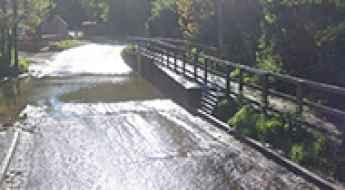
The Perils of Rufford Ford: A Modern Lesson in Underestimating Nature as it claims Vehicles and Number Plates!
Throughout history, the act of fording bodies of water has been an essential, albeit challenging, task for humans. From the initial treks on foot to the adventurous crossings on horseback, the goal has always been clear: to cross to the other side safely with oneself, one's belongings, and one's mode of transportation unscathed. Despite the leaps in technological and mechanical advancements over the past few centuries, this task remains daunting, as vividly illustrated by the saga of Rufford Ford.

Shelsley Walsh is the oldest motor sport venue in continuous use in the world
Shelsley Walsh Hill Climb is one of the oldest motorsport events in the world and is the oldest motorsport venue in continuous use in the world. It is located in Worcestershire, England. The hill climb course has been in operation since 1905, and its rich history makes it a significant part of the motorsport heritage.

Tactical Route Planning: Risk Mitigation for International Drives
Driving in a foreign jurisdiction introduces a layer of unpredictable variables that can compromise both vehicle integrity and occupant safety. Statistics indicate that 18% of drivers attribute "near-miss" incidents abroad to a lack of preparation, while 44% report becoming lost in high-consequence environments. For the serious road enthusiast, route planning is not about convenience—it is a tactical necessity to manage fuel autonomy, terrain hazards, and emergency logistics.
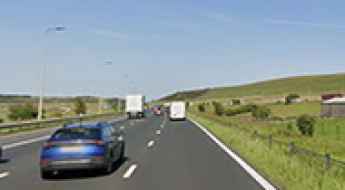
M62 at Stott Hall Farm: The House That Split a Motorway
If you drive along the M62 motorway, on the border between Lancashire and Yorkshire, between junctions 22 and 23, you'll be greeted with an unusual sight: a farm in the middle of the motorway, sandwiched by multi-lane roads on both sides.

The Fastest Road in Leeds? Welcome to Elland Road
Elland Road is more than just a famous street name in Leeds; it is a location synonymous with speed and history. While most know it as the home of Leeds United FC, this urban route recently witnessed one of the most unusual speed challenges in modern motorsport: a head-to-head race between Premier League footballers and an F1 car.

Ferry Road: Driving the Tidal Marsh Track of Woodbastwick
Ferry Road is a narrow tidal route located within the Woodbastwick Fens and Marshes in the Norfolk Broads, England. The single-lane track runs across the low-lying wetlands of the Bure Marshes National Nature Reserve, leading to the seasonal foot ferry terminal directly opposite Horning. It's one of the Periodically Flooded Roads.
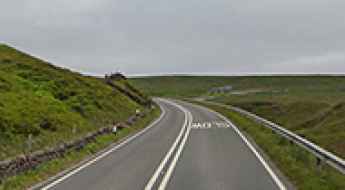
The UK's Most Crash-Prone Scenic Roads Ranked
Some of the most beautiful drives in Britain are also the most dangerous. The roads that snake through moorland, cut across mountain passes or wind along dramatic coastlines tend to attract drivers precisely because they're challenging. And that challenge comes at a cost.