Is driving in the Troodos Mountains of Cyprus difficult?
The Troodos Mountains, rising to 1,952m (6,404ft) at Mount Olympus, represent the most demanding driving environment in Cyprus. Moving away from the coastal resorts means entering a landscape of steep gradients, narrow village passages, and relentless hairpin turns. For a driver, the Troodos range is not just a scenic backdrop but a technical challenge where engine cooling, brake management, and constant gear shifting are required to navigate the high-altitude interior of the island.
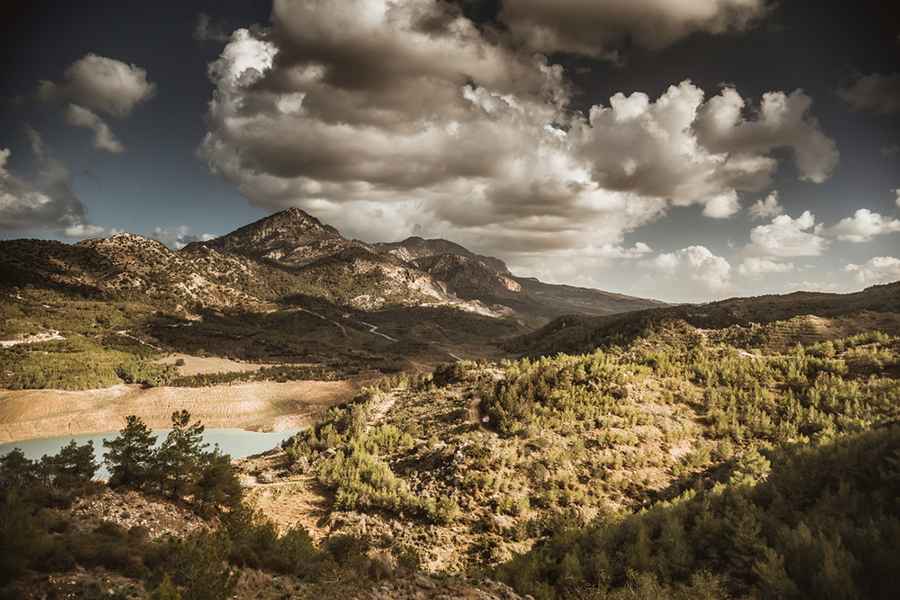
| Road facts: Troodos Mountains | |
|---|---|
| Highest Point | Mount Olympus (1,952m / 6,404ft) |
| Region | Central Cyprus |
| Road Surface | Paved (with occasional unpaved village links) |
| Hazards | Steep grades, black ice (winter), rockfalls. |
How to drive to the summit of Mount Olympus in Cyprus?
Reaching the highest point of the island requires a climb that starts almost at sea level. The roads leading to the Troodos Square and then up to Mount Olympus feature sustained gradients that put a massive load on a vehicle’s cooling system, especially during the summer heat when temperatures can exceed 40°C in the foothills. As you gain elevation, the air cools, but the roads narrow significantly. The final stretch to the peak is paved, but it is often crowded with local traffic and tour buses, making the tight hairpins a test of patience and precise steering.
What are the road conditions in the Troodos mountain villages?
The secondary roads connecting the traditional villages of Troodos are a different world from the coastal highways. In villages like Kakopetria or Omodos, the streets are often made of stone or very old asphalt and are barely wide enough for one vehicle. Navigating these built-up areas requires constant attention to blind corners and local delivery vans that move quickly through the narrow gaps. Beyond the village centers, the roads often lack guardrails, and the steep drops into the verdant valleys mean that any lapse in concentration can lead to a serious exit from the asphalt.
Is driving in the Troodos Mountains dangerous in winter?
While Cyprus is famous for its sun, the Troodos range is a high-risk zone from December to March. Heavy snowfall frequently blocks the roads leading to the summit of Mount Olympus. Even when the roads are plowed, black ice is a major hazard in the shaded forest sections. Many rental cars on the island are not equipped with winter tires or chains, making the 1,952m ascent a treacherous slide. If the "Snow" signs are active, do not attempt the climb without a 4x4 or chains, as the steep ramps will leave you without traction in seconds.
What should you check before driving through the Troodos range?
Before heading into the central massif, check your brake fluid and pad wear. The descent from Troodos back toward Limassol or Nicosia is a long, continuous drop where brake fade is a real possibility if you rely solely on the foot brake. Use engine braking in lower gears to manage your speed. Also, be aware of rockfalls; heavy rains often dislodge debris from the steep mountainsides onto the road surface. In remote areas, fuel stations are rare and often closed outside of peak hours, so never start the climb to Mount Olympus with less than half a tank of fuel.
Image credit: Depositphotos