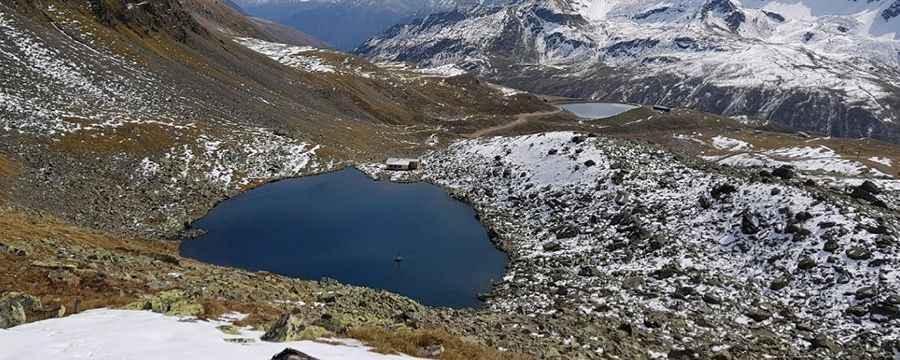
Driving the steep 4x4 track to Gossenköllesee in Tyrol
Gossenköllesee is a high-altitude alpine lake at an elevation of 2,445 meters (8,021 ft) above sea level, located in the Stubaier Alps within the Austrian state of Tyrol. The road to the lake is not a standard mountain pass but a rugged chairlift access trail designed for heavy-duty service. Reaching the summit requires navigating 4.3 kilometers of unpaved, rocky terrain where the average gradient of 9.20% only tells half the story. This is a high-load environment where the "loose stones" and the extreme incline demand a specialized vehicle and a driver who understands the logistics of high-altitude traction.
| Road facts: Gossenköllesee | |
|---|---|
| Location | Tyrol, Austria |
| Elevation | 2,445m (8,021ft) |
| Length | 4.3 km (2.6 miles) |
| Average Gradient | 9.20% |
How difficult is the road to Gossenköllesee?
Starting from Kühtai, the 4.3-kilometer ascent is a concentrated test of mechanical endurance. The road surface is composed of gravel and loose rocks that become increasingly aggressive in the upper sections. This is a technical 4x4-only route; attempting the climb in a standard SUV will likely result in shredded tires or a burnt-out clutch. The 9.20% gradient is unrelenting, and on the steepest ramps, the "loose stones" make it difficult to maintain the steady momentum needed to clear the obstacles. Every meter gained requires total focus on your driving line to avoid the deep ruts carved by mountain runoff and service machinery.
Is the Gossenköllesee track open year-round?
No. Due to its extreme elevation in the Tyrolean Alps, the road is only accessible during a very narrow time-frame in late summer. For the majority of the year, the track is buried under deep snow and is part of the Kühtai ski area infrastructure. Even in July, patches of snow can remain on the north-facing slopes, turning the "rocky and gravel" surface into a slippery mud trap. The window for driving is short, and you should always check local weather reports, as a sudden alpine storm can wash out parts of the track, making the narrow ledge sections impassable.
What are the main hazards on the Kühtai chairlift trail?
The primary hazard is the combination of extreme steepness and the unstable nature of the "loose stones." On the descent, the road is a nightmare for braking systems; dropping nearly 400 meters in just 4 kilometers on a shifting surface means your tires will struggle to find a grip while your pads heat up rapidly. There are no safety barriers, and the road is often narrow, forcing you to plan your passing maneuvers with service vehicles well in advance. The psychological pressure of the climb is high, as the upper part of the trail becomes significantly more rocky, leaving zero room for steering errors or mechanical hesitation.
What mechanical prep is needed for the 2,445m Tyrolean climb?
Before leaving Kühtai, verify that your 4WD system and low-range gearbox are functioning perfectly. A 9.20% average gradient on a loose surface is a torture test for any motor, and the slow-speed crawl provides very little airflow to the radiator. Check your tire sidewalls for any cuts; the jagged granite of the Stubaier Alps can easily slice through standard tires. On the descent, do not ride your brakes; stay in the lowest gear possible to let engine braking hold the vehicle's weight. Carry a full-sized spare, extra water, and basic recovery gear, as a breakdown at 2,445 meters on a chairlift trail is a high-isolation emergency where standard roadside assistance will not reach you.
Pic: Chris B