How to drive the steep Dolomitenstraße to Karlsbader Hütte?
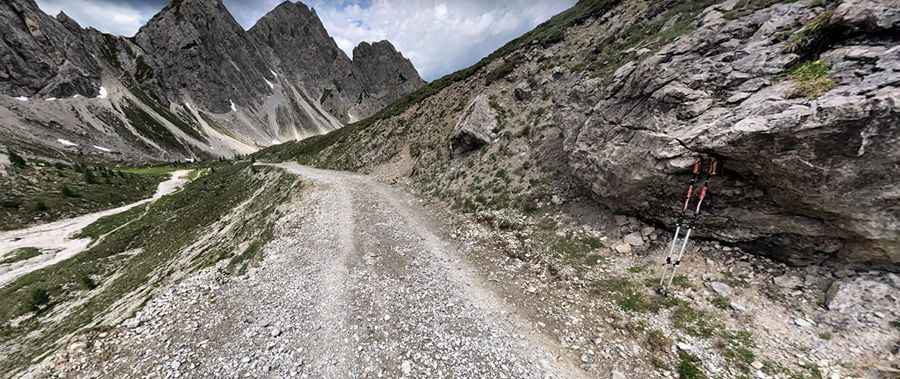
The Dolomitenstraße is a high-mountain service road located in the Lienz Dolomites, in the Austrian state of Tyrol. Reaching an elevation of 2,244m (7,362ft) at the Karlsbader Hütte, the route is a technical climb starting from Bad Jungbrunn. Logistically, the road is divided into a public-access paved sector and a restricted unpaved track situated next to the Laserzsee lake.
| Road facts: Karlsbader Hütte | |
|---|---|
| Location | Lienz Dolomites, Tyrol, Austria |
| Max Elevation | 2,244 m (7,362 ft) |
| Length | 12.5 km (7.76 miles) |
| Max Gradient | 18% |
| Surface | Paved / Unpaved (Restricted) |
What is the technical profile of the Dolomitenstraße?
The 12.5 km route from Bad Jungbrunn features a relentless elevation gain of 1,582 meters. Technically, the road maintains an average gradient of 11.83%, with critical ramps reaching 18%. Logistically, the first section is a toll road (Mautstraße) that is fully paved but extremely narrow, requiring constant attention to downhill traffic priority. The high-load ascent puts significant thermal stress on the vehicle’s transmission and cooling systems, especially on the sustained 18% ramps before reaching the Dolomitenhütte.
Are there vehicle access restrictions on the road to Karlsbader Hütte?
Logistically, the road is not fully open to private motor vehicles. Technically, motorized transit is permitted only up to the Dolomitenhütte (1,616m). Beyond this point, the final 3.1 km to Karlsbader Hütte is an unpaved service track strictly closed to public cars and reserved for mountain bikes and authorized logistical vehicles. This upper section consists of loose scree and rocky steps that require 4x4 capability for authorized service transits, particularly to navigate the technical hairpins near the Laserzsee lake.
How to manage the 18% gradients in the Lienz Dolomites?
Driving the Dolomitenstraße requires disciplined gear selection. Technically, the 11.83% average gradient means that engines will operate at high RPM for extended periods. Logistically, the descent is the most hazardous phase; the 18% ramps can cause rapid brake glazing if constant pressure is applied. It is a mandatory safety protocol to use low-range engine braking to manage the descent from 1,616m. The road is typically impassable during the winter months, as snow removal is not performed on the upper technical sectors.
Logistical coordination for the Lienz-Tyrol transit
Before attempting the climb, drivers must verify the vehicle's braking integrity. Logistically, the toll station at the base provides updated information on the road's operational status. The proximity to the border with Carinthia makes this a key logistical point for high-altitude logistics in the southern part of Austria. For those planning a transit, it is essential to note that the parking capacity at the authorized limit is restricted, and early arrival is a recommended logistical strategy to avoid bottlenecks on the narrowest sections of the Dolomitenstraße.
Pic: frans hendriks