Pereval Chekhovskiy: Driving the Muddy 4x4 Track on Sakhalin Island
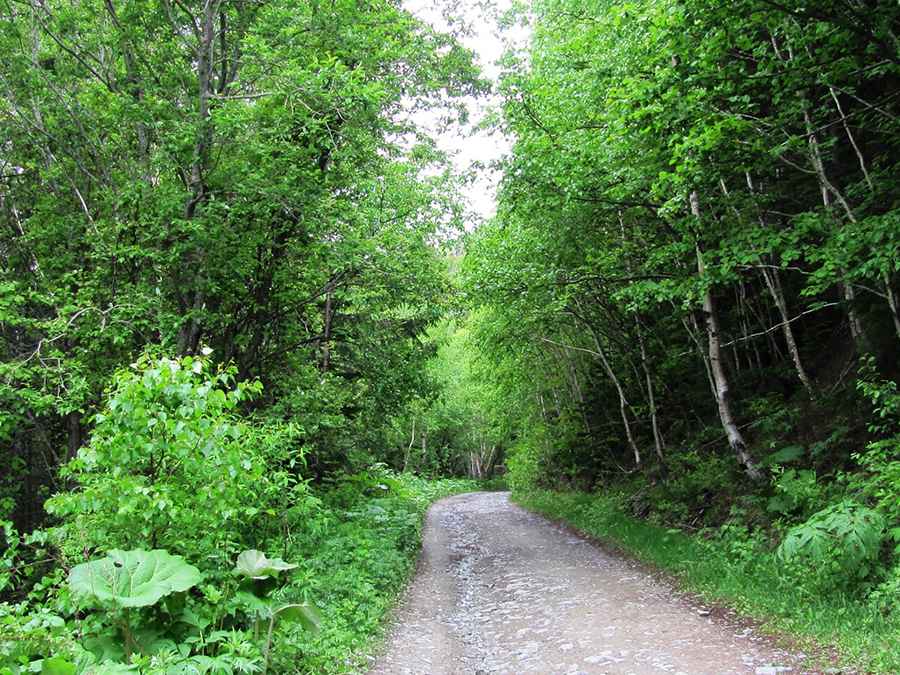
Pereval Chekhovskiy is a mountain pass at an elevation of 466 meters (1,528 ft) above sea level, located in the southeastern part of Sakhalin Island, within the Sakhalinskaya Oblast of the Russian Far East. The unpaved mountain track to the summit cuts through dense forest. It's a rough logging road permanently soaked and ruined by the Pacific weather.
| Road facts: Pereval Chekhovskiy | |
|---|---|
| Location | Sakhalin Island, Russian Far East |
| Length | 10 km (6.21 miles) |
| Elevation Gain | 412 meters (1,351 ft) |
| Surface | Unpaved (Deep mud, clay, and loose river stones) |
| Width | Single-track with zero paved shoulders |
How challenging is the 10km track to Pereval Chekhovskiy?
The 10 km dirt track climbs 412 vertical meters through the dense taiga forest, starting from the outskirts of Yuzhno-Sakhalinsk. While the average gradient sits at 4.12%, the soil structure consists of soft native clay and loose stones that disintegrate under heavy rain. The track is heavily deformed by the wide tires of heavy logging trucks, creating deep ruts that scrape the underbody of standard SUVs. A high-clearance 4x4 with aggressive mud tires and mechanical differential locks is required to clear the constant washouts without getting high-centered in the dirt trenches.
What are the seasonal hazards of the Pereval Chekhovskiy road?
Heavy winter blizzards bury the entire mountain sector under meters of snow from November until late May, making the pass completely impassable for wheeled vehicles. During the spring thaw, the melting snow turns the track into a deep, sticky clay quagmire where wheels spin instantly and lose all lateral grip. Thick fog banks roll off the Sea of Okhotsk regularly, dropping visibility down to less than three meters inside the narrow tree lanes.
What is the track environment like on the Sakhalin mountains?
The narrow road is tightly hemmed in by giant wild vegetation and bamboo thickets that scratch vehicle doors and break side mirrors. Severe Pacific windstorms frequently throw fallen pine trees across the track, blocking the route completely. The drive is pretty remote: there are no communication networks, fuel supplies, or emergency services along the road.
Pic: VEL Айруп