Driving the P299 road through Karmadon Canyon in North Ossetia
The Karmadon Canyon Road is a high-risk transit located in the Prigorodny District of the North Ossetia–Alania Republic, Russia. Running through the Genaldon River valley on the northern slope of the Mount Kazbek massif, the road is known as the P299. This sector is defined by its extreme glaciological instability, following the massive 2002 Kolka Glacier collapse that redesigned the canyon’s topography and destroyed the original infrastructure.
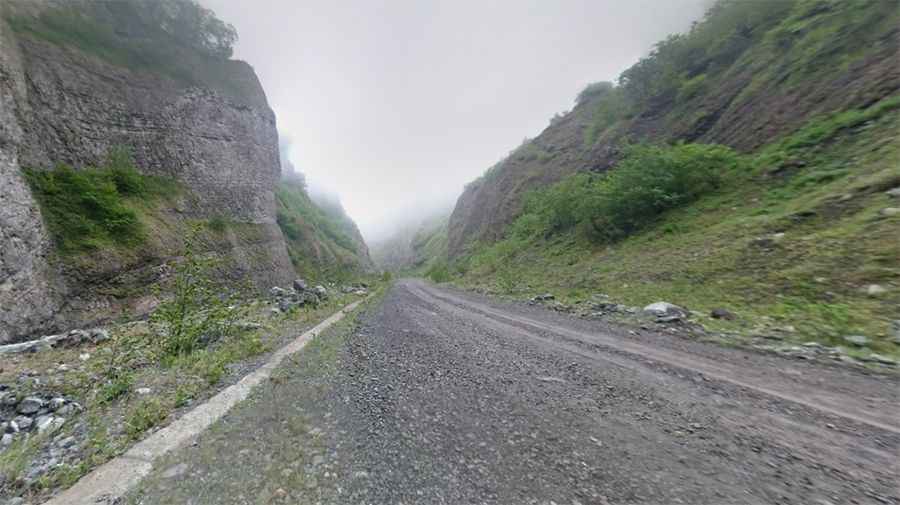
| Road facts: Karmadon Canyon (P299) | |
|---|---|
| Location | North Ossetia–Alania (Russia) |
| Road Number | P299 (Unpaved) |
| Length | 11.2 km (6.95 miles) |
| Primary Hazard | Glacial mudflows and road washouts |
Can you drive across the Karmadon Gorge today?
Technically, the P299 is an unpaved track navigable by most passenger vehicles in dry weather, but it remains a high-maintenance route. Starting at the town of Karmadon, the 11.2 km transit across the gorge is subject to rapid deterioration. Logistically, the roadbed is built on unstable glacial debris; after heavy rains, the Genaldon River often swells, leading to sudden washouts that can cut off the 11.2 km link. Driving this road requires a vehicle with decent ground clearance to manage the loose rocks and silt deposits left by constant geological activity.
What are the main hazards on the Karmadon Canyon road?
The primary technical hazard is the unpredictability of the Kolka Glacier. Historically, the gorge has suffered catastrophic flows in 1834, 1902, and 2002, moving at speeds exceeding 180 km/h. While the road is currently open, it is not a standard tourist destination. The narrowness of the canyon creates a "funnel effect" for mudflows, leaving zero escape routes for drivers in the event of a new glacial surge. Additionally, the high-altitude weather in the Caucasus Range brings sudden fog and low visibility, making the 11.2 km drive much more dangerous due to the unprotected drops into the riverbed.
Mechanical and logistical prep for the P299
For a safe transit, your vehicle must be logistically self-sufficient. There are no services within the canyon, and the 11.2 km drive typically takes between 35 and 45 minutes depending on the roadbed's state. Technically, you should check for undercarriage integrity after driving through the rocky sections. The area features several memorials, including one for the Bodrov film crew, which serve as grim reminders of the terrain's volatility. Always monitor local meteorological reports before entering the gorge; if severe weather is forecasted, the P299 should be avoided as the risk of landslides increases exponentially on the steep, timberless slopes of the Mount Kazbek massif.
Road suggested by: jorge manuel gómez sánchez
Pic: Oleg Ivanov