From Road Hazards to Collisions: 5 Risks Drivers Should Recognize
Most drivers can identify a hazard when it appears, yet recognizing danger is not the same as responding well to it. A pothole, patch of glare, or object in the lane may look ordinary, but the distance between noticing it and reaching it can disappear almost immediately.
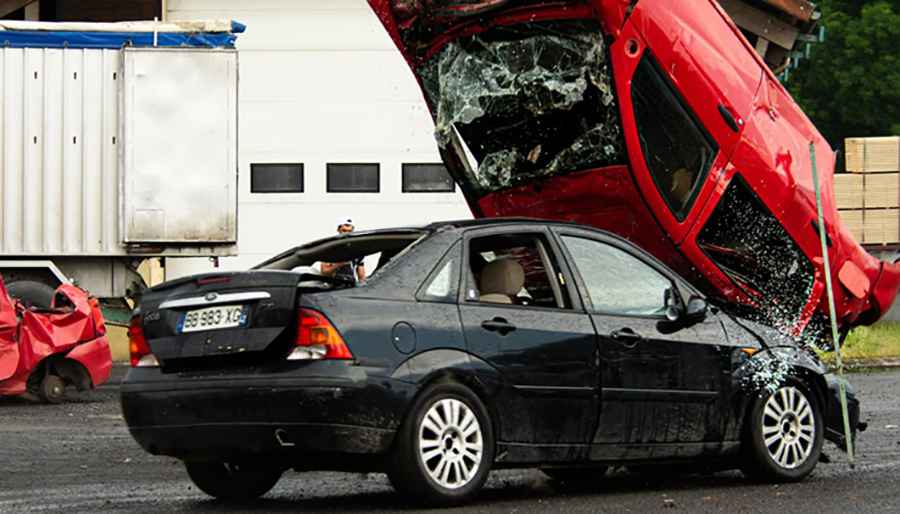
What happens in that brief interval often matters more than how dramatic the hazard looks. Drivers must detect a change, understand it, and decide how to respond while the vehicle keeps moving. Road hazards and other driving hazards become collisions through that short sequence, often within only a second or two. Understanding what belongs in this category is therefore the necessary starting point for seeing why familiar situations can produce very different outcomes.
What Actually Counts as a Road Hazard
A road hazard is anything on or near the roadway that forces an unplanned change in speed or direction. That definition puts potholes, road debris, sun glare, and an inattentive driver in the same conversation because each disrupts the path a driver expected to follow.
Road hazards fall into four working categories. Roadway conditions include uneven pavement and construction zone surfaces. Environmental hazards include poor weather conditions, such as rain, snow, and sleet. Vehicle-related hazards include blowouts, breakdowns, and dropped loads, while human-behavior hazards include distraction, fatigue, speed, and unpredictable road users.
The category reveals whether a threat is predictable, avoidable, or simply survivable. Fixed hazards allow advance route and speed choices, while moving hazards provide only a brief reaction window.
How a Hazard Turns Into a Collision
Most hazard-related collisions follow four links: late detection, limited reaction time, a steering or braking input, and a secondary impact. That impact might involve another vehicle, a barrier, or an oncoming lane.
Using roughly 1.5 seconds as a working reaction-time estimate, a vehicle traveling at 55 mph covers about 120 feet before the brakes engage. Object size matters less than closing speed and how early the driver notices the threat. Regularly scanning the road extends that detection window.
Overcorrection often turns a manageable problem into a serious collision. Jerking the wheel to avoid a pothole or animal might spare a tire, but the resulting lane departure can cause a rollover or head-on impact. The secondary collision is often more damaging than contact with the original hazard. Controlled braking and small steering inputs help preserve stability.
The response window also receives close attention after a crash. Insurers, crash investigators, and car accident lawyers like Douglas R. Beam P.A. reconstruct the seconds between detection and impact to determine what the driver saw and how the vehicle responded. Photographs, vehicle data, road markings, and witness accounts can clarify that sequence.
Advanced driver-assistance systems do not remove this problem. NHTSA and IIHS guidance treats automatic emergency braking and lane departure warnings as support features, not replacements for situational awareness. These systems detect certain vehicles and lane markings, but low debris, flooded pavement, and wildlife near the shoulder may not fit their detection parameters. Relying on automation can therefore delay the human response it should support.
5 Risks Drivers Should Recognize
These five risks are distinguished by how strongly the driver’s response shapes the outcome. Each attacks a different part of the collision chain, from detection and following distance to steering control. Recognizing which link is under pressure makes defensive driving more specific than simply being told to slow down.
1. Debris, Potholes, and Work Zone Surfaces
Road debris and potholes create an immediate temptation to swerve. The response rule is simple: brake early and hold the line whenever the object can be crossed or straddled without threatening the vehicle’s occupants. Tire, wheel, or suspension damage can be repaired, while an uncontrolled lane departure cannot be undone.
A work zone changes the calculation because narrow lanes, barriers, uneven surfaces, and missing shoulders remove escape space. Drivers should reduce speed before entering the construction zone, not after spotting rough pavement. If an object cannot be cleared safely, firm, straight-line braking preserves more control than a sudden sideways movement.
2. Weather That Steals Your Visibility
Rain, fog, snow, sleet, and sun glare attack detection before affecting vehicle control. The response rule is to match speed to visible stopping distance rather than the posted limit. If the road disappears into fog or spray, the vehicle must be able to stop within the portion that remains visible.
These treacherous driving conditions also require appropriate lighting. Low beams reduce reflected glare in fog, while a clean windshield limits haze when facing low sun. At dawn and dusk, sun glare can conceal pedestrians, cyclists, lane markings, and stopped traffic, so extra space matters even on dry pavement.
3. Distraction and Fatigue Behind the Wheel
Distracted driving removes the detection link entirely. NHTSA explains that taking your eyes off the road for five seconds at 55 mph is comparable to traveling the length of a football field without looking. The response rule is to finish visual and manual tasks before moving, not during a quiet stretch of road.
Drowsy driving creates a similar delay, although fatigue is harder to recognize. Wandering thoughts, repeated yawning, missed signs, and difficulty recalling recent miles indicate reduced attention. Opening a window does not restore alertness. A driver who cannot maintain continuous attention needs to stop somewhere safe.
4. Speed and the Gap You Leave in Front
Speeding shortens the available response time while increasing the distance required. The response rule is to preserve at least a three-second gap in ordinary conditions and add more space when weather, darkness, hills, or curves restrict sight lines. Three seconds becomes inadequate when the lead vehicle can stop within an area the following driver cannot see.
Closing speed matters more than either vehicle’s speed in isolation. A modest-speed approach to stationary traffic can still produce a hard impact if detection comes late. A safe following distance creates room for progressive braking and gives drivers behind more time to react.
5. Pedestrians, Cyclists, and Wildlife
Pedestrians and cyclists are moving hazards only in the technical sense. They are vulnerable road users, so the response rule is to brake firmly and yield space rather than pass closely or predict their movement. Extra caution belongs near crossings, parked vehicles, driveways, and road edges where someone can enter the lane abruptly.
Wildlife requires a different response. Drivers should brake hard while holding their lane when an animal appears because swerving can send the vehicle into opposing traffic or off the road. Animals often emerge near the edges of available light, and one crossing animal can be followed by another.
What to Do Right After You Hit Something
- Keep the steering straight, and allow the vehicle to slow before selecting a stopping place. A gradual, signaled exit is safer than stopping abruptly in a live lane.
- Stop beyond the pothole, animal, or road debris rather than beside it. Move well onto the shoulder, activate the hazard lights, and remain belted if traffic makes stepping outside unsafe. Broader guidance on handling hazards safely starts with protecting the vehicle from a second impact.
- When conditions permit an inspection, check the tire sidewalls, wheel rims, and undercarriage for fluid, in that order. After moving again safely, note any steering pull or new vibration above 40 mph because wheel, suspension, and alignment problems are not always visible at the roadside.
- Photograph the location and hazard only from a safe position. Clear images give an insurer, local road authority, or the Federal Highway Administration context for a debris report or pavement complaint.
Seeing Sooner Is the Whole Advantage
Hazards remain part of driving, but the response window is not fixed. Scanning the road 12 to 15 seconds ahead and maintaining a genuine following gap can turn an abrupt surprise into a controlled decision.
That is the central judgment behind defensive driving. A driver who sees trouble early can reduce speed, preserve the vehicle’s balance, and choose where to go. A driver who sees it late has fewer options, regardless of experience or technology. The best response begins before the hazard reaches the hood.
Image source