How to drive the mining road to Kumargh in Tajikistan?
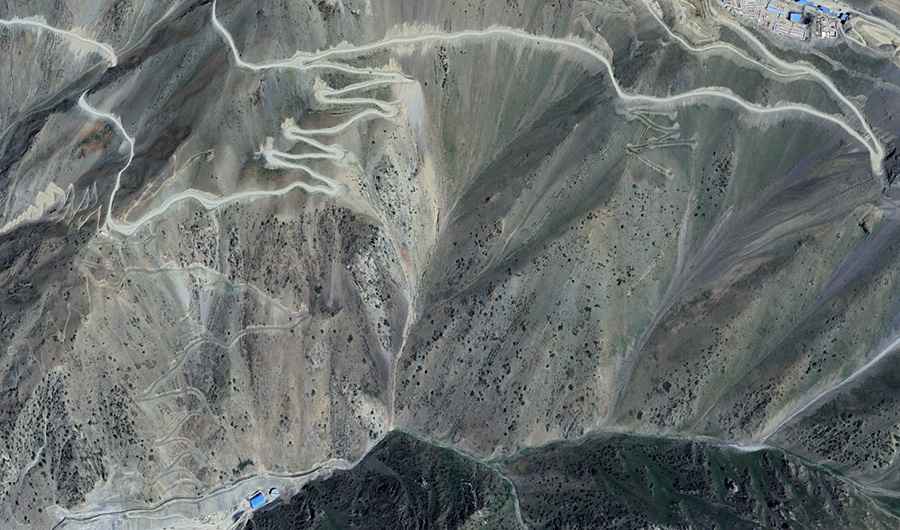
Kumargh is a high-altitude mountain peak at an elevation of 3,554m (11,660ft) above sea level, located in the Kuhistoni Mastchoh District of Tajikistan. Technically, the route is a specialized industrial track serving the Kumarghi Bolo Gold Mine in the southern Sughd Province. Navigating this 16.3 km sector requires a vehicle prepared for sustained high-torque output and a driver capable of managing extreme lateral exposure on unstable mining tailings.
| Road facts: Kumargh (Mining Road) | |
|---|---|
| Location | Sughd Province, Tajikistan |
| Elevation | 3,554 m (11,660 ft) |
| Length | 16.3 km (10.12 miles) |
| Average Gradient | 10.52% |
What is the technical difficulty of the S315 road to Kumargh?
Starting from the junction with the paved M34 Road, the ascent to Kumargh covers 16.3 km. Technically, the road is entirely unpaved and serves heavy mining machinery, meaning the surface is often compressed but prone to deep rutting. The elevation gain of 1,716 meters results in an average gradient of 10.52%, with several technical ramps exceeding 15%. A high-clearance 4x4 vehicle with a low-range gearbox is essential to maintain traction on the loose, rocky surface and to prevent engine overheating during the sustained high-altitude climb.
What are the safety hazards of the Kumarghi Bolo mining track?
The logistics of the Kumargh ascent are defined by narrow sections and extreme unprotected drops. Technically, the roadbed is cut into the steep slopes of the Sughd mountains, where erosion frequently compromises the outer edges of the track. Safety protocols mandate a strict focus on situational awareness, especially when encountering descending mining trucks that always have the right of way. The road features sharp, unbanked curves where the vehicle's center of gravity must be carefully managed to avoid sliding on the fine dust and debris typical of gold mining operations in northwestern Tajikistan.
How to manage the mechanical descent from 3,554m?
The 16.3 km descent from the Kumargh peak is a critical test for any braking system. Technically, a 10.52% average gradient over this distance can lead to extreme thermal stress on brake rotors and pads. To ensure safety, drivers must rely on a low-gear engine braking strategy. Logistically, the isolation of the Kuhistoni Mastchoh District means there is no mechanical support available; carrying a secondary spare tire and reinforced recovery equipment is a technical requirement. The track is also subject to rapid weather changes, where sudden rain can turn the mineral-rich soil into a low-friction hazard within minutes.
Road suggested by: Hugh Wilson