M34 road: Driving the mountain highway from Dushanbe to Khujand
The M34 is a major highway in Tajikistan, running north-south to connect Dushanbe, the national capital, with Khujand, the country's second-largest city. The route is a primary transport link through the northwestern mountain ranges of the country.
| Road facts: M34 Highway | |
|---|---|
| Location | Dushanbe to Khujand (Tajikistan) |
| Length | 302 km (187 miles) |
| Max Elevation | 2,751 m (9,025 ft) - Shakhristan Pass |
| Surface | Paved |
How busy is the M34 road?
Running through the northwestern part of the country, this highway links the most important cities of Tajikistan. The asphalted lane faces heavy daily traffic and is constantly packed with multi-axle freight trucks and commercial cargo convoys moving between the provinces.
Is the M34 road paved?
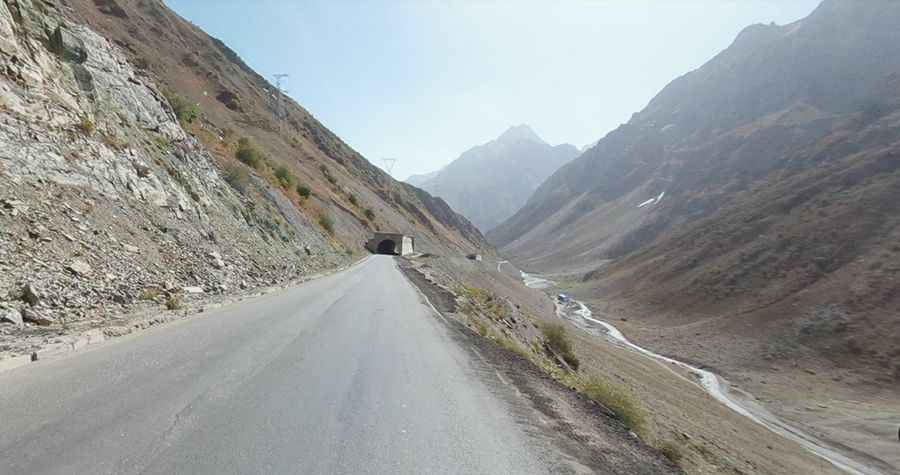
This mountain highway is totally paved but narrow in several cliff-side sectors, featuring unprotected rock shelves and sheer vertical drop-offs with no lateral barriers. The route scales steep slopes via tight hairpin turns and runs through dozens of narrow, completely unlit tunnels. The most critical point is the notorious Anzob Tunnel, nicknamed the Tunnel of Fear or Tunnel of Death by locals due to its toxic exhaust fumes and broken drainage floor. This tunnel allows drivers to bypass the original Anzob Pass, an unpaved gravel mountain road sitting at 3,372 meters (11,062 ft) above sea level.
How long is the M34 road?
The highway is 302 kilometers (187 miles) long, running from Dushanbe to Khujand, the capital of Tajikistan's northern Sughd province. Due to the slow-moving heavy transport and the mountain geography, driving the 302-kilometer route without stopping requires between 6 and 8 hours.
Is the M34 road open year-round?
The highway reaches its highest point at 2,751 meters (9,025 ft) above sea level at the Shakhristan Pass. The paved route is maintained to remain open all year round, but winter weather from November to April brings frequent mountain fog blankets, black ice, and heavy snowstorms. Intense alpine avalanches regularly block the approach ramps, forcing temporary closures of the pass lanes until clearing machinery arrives.
Pic: Vidas Pakalnis