Masik Pass: Driving the Concrete Mountain Road from Pyongyang to Wonsan
Masik Pass, also known as Masikryong, is a high mountain crossing in the Kangwon Province of North Korea. Situated near Taehwa Peak, this pass is the highest point on the primary highway connecting the capital, Pyongyang, with the port city of Wonsan, and serves as the only access route to the Masikryong Ski Resort.
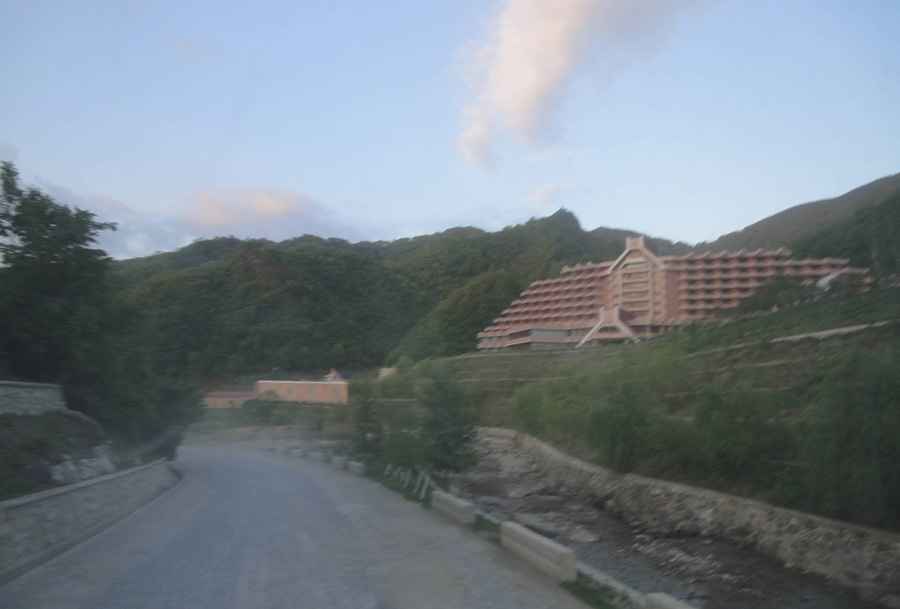
| Road facts: Masik Pass | |
|---|---|
| Location | Kangwon Province, North Korea |
| Route | Pyongyang to Wonsan Highway |
| Surface | Aged concrete slabs and rough asphalt |
| Drive Time | 3.5 to 4 hours (200 km) |
| Infrastructure | Zero fuel stations or repair shops between major cities |
How bad is the concrete surface of the Pyongyang-Wonsan highway?
The 200 km run across the peninsula is notorious for its surface of old, ribbed concrete slabs. The expansion joints between the blocks are badly degraded, creating a relentless, bone-shaking vibration that rattles body panels and stresses steering racks for hours. As the road climbs into the Masikryong Range, large potholes, missing chunks of concrete, and deep expansion gaps can easily slice a tire open at speed. There are no mechanics or tire repair shops along the route, meaning a blowout leaves you stranded on the shoulder.
What are the winter hazards at Masik Pass?
During winter, temperatures regularly plunge below -20°C, turning the concrete highway into a giant sheet of ice. Snow removal around the pass is done primarily by hand with shovels and brooms rather than heavy plow trucks, and salt is rarely used. The steep ramps near the summit become zero-traction zones where tires spin instantly without steel snow chains. If a vehicle slides off the road into the ditch, there is no emergency towing service or roadside assistance available, and the extreme cold becomes an immediate threat.
Why is night driving dangerous in Kangwon Province?
The entire highway lacks overhead lighting, and driving after dark is highly hazardous due to the obstacles on the unlit lanes. It is common to encounter broken-down military trucks, slow agricultural tractors, or pedestrians walking along the concrete shoulders without any lights or reflectors. Furthermore, the route is a heavily monitored military zone with multiple checkpoints where local authorities strictly inspect travel permits and enforce fixed transit times between checkposts.
Where do you get fuel for the Masik Pass crossing?
Civilian fuel stations do not exist along the highway or at the mountain pass itself. Vehicles must carry enough fuel from Pyongyang to complete the entire round trip to Wonsan and back, as any fuel supplies near the ski resort are reserved strictly for official government and military transport. There is no mobile phone coverage or emergency calling system available throughout the entire mountain sector if a vehicle runs dry or suffers a mechanical breakdown.
Pic: Jes Tuan